

 Shopify blog

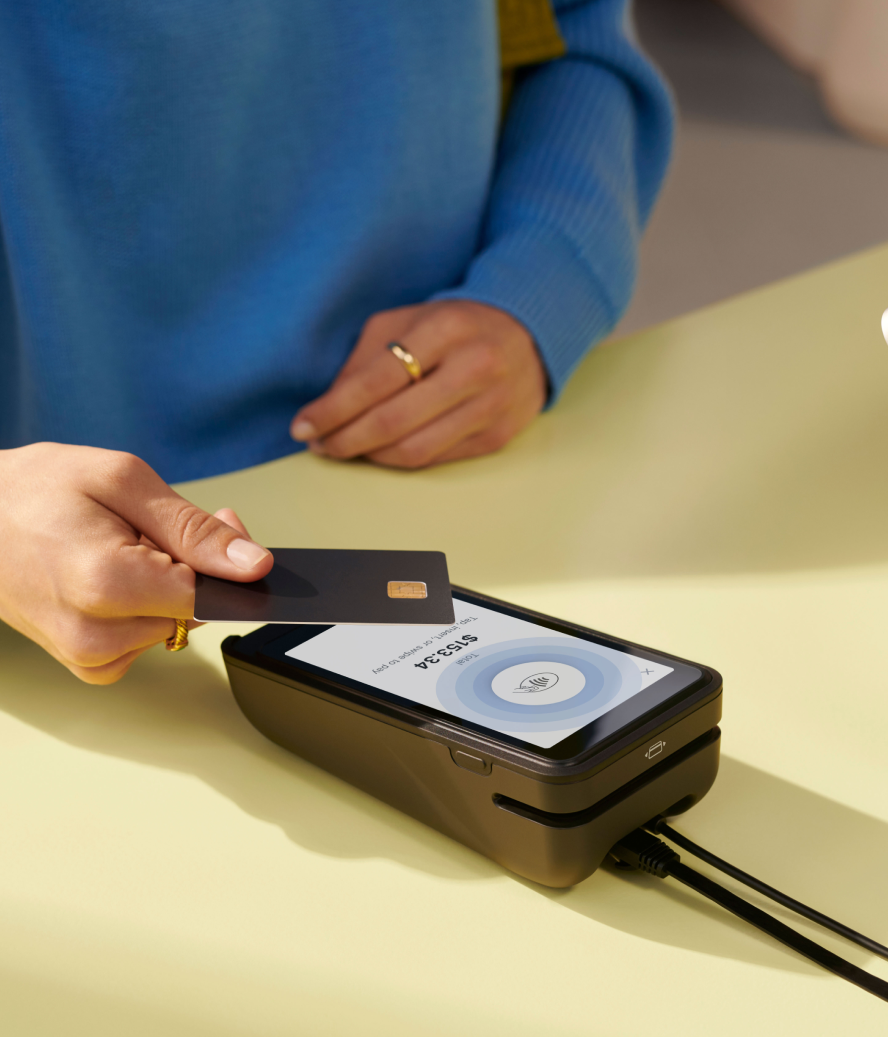

Cash transactions are still used for in-person purchases, tipping, and other situations where speed and simplicity matter.
In the Federal Reserve’s 2025 Findings from the Diary of Consumer Payment Choice, cash accounted for 14% of all consumer payments. Credit and debit cards made up slightly more, at 35% and 30% of payments, respectively. Some states, like Colorado, even passed legislation requiring retailers to accept cash payments.
If you’re a retailer considering different payment methods to offer in-store, it’s still smart to accept cash. This article discusses cash transactions, how to record them, and reporting requirements from the Internal Revenue Service (IRS).
What is a cash transaction?
The term cash transaction refers to any deal in which money changes hands. In retail businesses, cash transactions usually happen when customers pay with cash in-store. Cash can come in the form of paper bills or coins.
Cash payments vs. non-cash transactions
There are two types of transactions: cash and non-cash.
- Cash transactions are those in which cash changes hands.
- Non-cash transactions can be made using credit cards, debit cards, digital wallets, or electronic funds transfer payments.
The main advantage of cash transactions is their immediacy: the buyer receives the goods or services right away, and the seller receives payment at the same time.
Cash transactions are also convenient since they do not require using a bank account or credit card. The main disadvantage of cash transactions is their risk: if the buyer does not have enough cash, the seller may not receive payment.
Payment for goods and services can also be made using electronic means, such as:
- Credit cards
- Debit cards
- ACH transfers
- Wire transfers
- Electronic checks
- Cryptocurrency like Bitcoin
The main advantage of electronic payments is that they are safe and secure. Electronic payments are also convenient, since they can be made anywhere worldwide. The main disadvantage of electronic payments is that they can take several days to process.
Recording cash transactions
You need to track your retail sales and revenue when running a brick-and-mortar store. That’s why it’s important to record all cash-based business transactions.
There are a few ways to do this: sales receipts, bank reconciliation, cash sheets, and POS data.
Sales receipts
One way to record cash transactions is by using your sales receipts. You need to tally up sales receipts and record each cash transaction chronologically.
Keep a cash journal for all receipts and invoices. A cash journal records all credit sales made by a business. A journal entry should include the sale date, the customer’s name, a description of the merchandise sold, the amount of the sale, and the sales tax.
Here’s how to use the cash receipt journal:
- Date: Record the date when you received the cash.
- Account credited: Input the account name credited due to the cash transaction.
- Ref: Enter any internal reference numbers.
- Explanation: Write a short explanation of the cash transaction.
- Cash dr: Record the amount of cash received into the general ledger.
- Sales discount: Note any discounts awarded to the buyer.
- Accounts receivable cr: Record the amount credited to a customer’s account.
- Sales cr: Record the cash sale amount.
- Other accounts cr: Record receipt of cash from other sources, like interest or rent.
Bank reconciliation
Another way to track cash is by reconciling your bank account.
Check your bank statements against your records to make sure there aren’t any discrepancies. You’d get an overview of all your transactions, not just cash. Reconciliation should be done every month, regardless of when the cash was received or paid.
Follow these eight steps to reconcile your bank statements:
- Identify your ending bank balance using your most recent statement or online banking portal.
- Compare your transaction records to the bank statement and investigate any discrepancies.
- Deduct outstanding checks that have not yet cleared the bank.
- Add deposits in transit that have not yet reached the bank.
- Add or subtract bank service charges or interest posted to your account.
- Investigate and determine the cause of any remaining differences.
- Make necessary adjustments to your records based on your findings.
- Update your records to reflect the final adjusted ending balance.
Cash sheets
Cash sheets are records of cash transactions used by businesses to keep track of their cash inflows and outflows. The cash sheet can track cash on hand, bank balances, and petty cash.
By keeping cash sheets, you’ll know if there’s any shortage or surplus. Don’t count cash at the cash register during the daily close without keeping a cash sheet, or it will leave you in the dark about shortfalls.
Cash sheets should include the date, type of transaction, amount, and source of funds. It’ll help you track cash flow and determine where the money’s going.
Some tips when using a cash sheet:
- Update your cash sheet regularly, preferably daily, to uncover potential discrepancies.
- Use the cash sheet to help track spending and identify areas where costs can be reduced.
- Use the cash sheet to help prepare for upcoming cash needs, such as payroll or inventory purchases.
POS data and cash drawer session reports
Point-of-sale (POS) data can help record cash transactions by providing information on each sale. This data can then be used to populate the sales journal and the cash receipts journal.
If you have a POS cash register, it combines point-of-sale software with a cash drawer, enabling you to securely receive and track cash payments. A POS system like Shopify comes with tools that assist with cash management, so you can balance your drawer and reduce discrepancies.
For example, you can see a cash payments summary that displays the overview of the cash payments for all sessions that occurred at the selected location within the time range.
When a cash transaction must be reported to the Internal Revenue Service
If your business receives a large amount of cash, the Internal Revenue Service (IRS) requires that you report it. You’ll have to file Form 8300 if you receive more than $10,000 in cash from one buyer in a single transaction or a series of related transactions.
In this case, what counts as a transaction isn’t just receiving a cash payment. It also includes:
- Selling goods, services, or property
- Renting out equipment or real estate
- Putting money into a trust or escrow
- Making or paying back a loan
- Exchanging cash for a check or money order
Who has to file Form 8300? Any person, company, corporation, partnership, estate, or trust. You’ll need to provide your name, address, and tax ID number when you file Form 8300. Along with the date and amount of the payment, you also need to provide the person’s name and address.
What counts as cash for Form 8300?
All US and foreign coins and paper money are always considered cash. Cashier’s checks, money orders, bank drafts, and traveler’s checks with a face value of $10,000 or less are sometimes considered cash.
Traveler’s checks count as cash only if:
- They are used for a “designated reporting transaction” like buying a car, boat, or jewelry
- The business knows the buyer is using them to avoid the $10,000 reporting rule
A personal check (one written from the payer’s own bank account) is not considered cash, no matter how much the check is for.
How the $10,000 limit works
The rule doesn’t apply only to one-time payments. The $10,000 limit can be reached a few ways:
- Multiple payments from the same person (or agent) within a 24-hour window count as one transaction. If the total exceeds $10,000, report it.
- Payments more than 24 hours apart are still related and reportable if you know they are part of the same deal or series of events.
- Filing is necessary as soon as the total cash received within one year of the first payment exceeds $10,000.
You can be fined if you meet the conditions but don’t file Form 8300.
When to file Form 8300
The form must be filed within 15 days of receiving the cash. You must give a written statement to the person named on the form by January 31 of the following year.
The customer statement has to include:
- Your business name and address
- A contact person and their phone number
- The total amount of reportable cash you received from them in that 12-month period
- A clear statement that you are providing this information to the IRS
How to e-file Form 8300
As of January 1, 2024, most businesses are now required to file Form 8300 electronically. The e-file mandate applies if your business is already required to file 10 or more information returns, such as Form 1099 or Form W-2, during a calendar year.
Electronic submissions are handled through FinCEN’s BSA E-Filing System. Even if your business falls below the threshold, the IRS encourages you to use this system for faster and more secure processing, although e-filing is optional for smaller filers.
If your business is not required to e-file, or if you have received a waiver as a result of undue hardship, you can submit a physical copy.
Paper forms are mailable to the following address:
Internal Revenue Service
Detroit Federal Building
PO Box 32621
Detroit, Mich. 48232
Cash drawer controls to prevent discrepancies
Even with the increase in digital payments, cash is still a fixture in the US economy. According to the Federal Reserve, 83% of Americans used cash at least once in a 30-day period.
Since cash is still common, retailers need tighter drawer controls to prevent theft, loss, and accounting errors.
Daily cash count and cash over/short
Tie every cash drawer to one person and one shift. When multiple people use the same drawer, it’s harder to investigate why money is missing. If a drawer is short or over, have a manager review the variance.
Shopify POS uses cash tracking sessions to monitor every dollar moving in and out of the drawer. At the start of a work period, staff must record a “starting float.” At the end of the shift, they perform a final count. Since Shopify tracks the expected balance based on sales, you can immediately identify a discrepancy.
With Shopify POS, each staff member uses a unique PIN to log in. This way, every transaction is tied to a specific person. You can also use POS roles to restrict actions like opening the cash drawer without a sale or giving refunds to specific staff.
Deposit frequency and internal controls
Regularly move cash from the register to the bank to reduce the amount of cash flowing around.
Ideally, make it so different people handle these three tasks:
- The cashier handles the cash
- The bookkeeper records and reconciles cash
- The manager reviews variances
Shopify reports allow you to separate cash sales from card sales. This makes it easy to know how much physical cash to include in your next bank deposit. Shopify also logs the float, adjustments, and final counts, so you have an audit trail that matches directly to your bank deposit slips.
Decline in cash transactions
Even before the onset of payment tech like digital wallets and tap-to-pay, fewer people used cash for everyday spending. The Fed’s 2018 findings found that cash represented 30% of all transactions. Today, as mentioned above, that number has dipped to 14%.
At the same time, cash hasn’t disappeared—more than 90% of surveyed Americans said they have no plans to stop using it. But globally, more access to financial services supports more non-cash payment activities. The World Bank’s Global Findex reports global account ownership at almost 80% for folks aged 15 or older.
While cash use is declining, it’s unlikely the US will become a cashless society anytime soon. Small businesses still prefer cash because it can reduce merchant card fees, and some state governments have passed laws prohibiting cash-free businesses.
Manage cash payments at your retail store
When you have a retail business that deals with cash payments, it’s vital to have a system to manage those payments. It helps you keep track of your money, identify discrepancies, and make smarter financial decisions. By following the processes above, you’re well on your way to improving cash management in your store.
Cash transaction FAQ
What are considered cash transactions?
- Cash in hand. This involves exchanging physical currency for goods or services.
- Cash on delivery. This form of cash transaction requires the customer to pay for the goods or services at the time of delivery.
- Cash in advance. This requires the customer to pay for the goods or services before they are delivered.
- Cash on pickup. This means the customer must pay for the goods or services at the time of pickup.
- Mobile cash. This involves using a mobile device to make payments.
- Online cash. This uses an online platform to purchase goods or services and make payments through an online bank account or credit card.
What cash transactions are reported to the IRS?
The Internal Revenue Service (IRS) requires cash transactions of more than $10,000 to be reported. Businesses must file Form 8300 with the IRS within 15 days of the transaction. You must provide a written statement to the buyer by January 31 of the following year and e-file if you have 10 or more other information returns, like W-2s or 1099s.
How are cash transactions recorded?
Cash transactions are recorded in the cash account of the general ledger. This means that the cash account should be debited for cash received and credited for cash paid out. For each transaction, there should be a corresponding entry in the general ledger that includes the date, amount, payee, and other relevant details.
Are cash transactions taxable?
Cash transactions are not necessarily taxable. Whether or not a transaction is taxable depends on the type of transaction. Generally, transactions involving sales of goods or services are taxable, while transactions involving gifts or loans are not taxable.


