

 Shopify blog

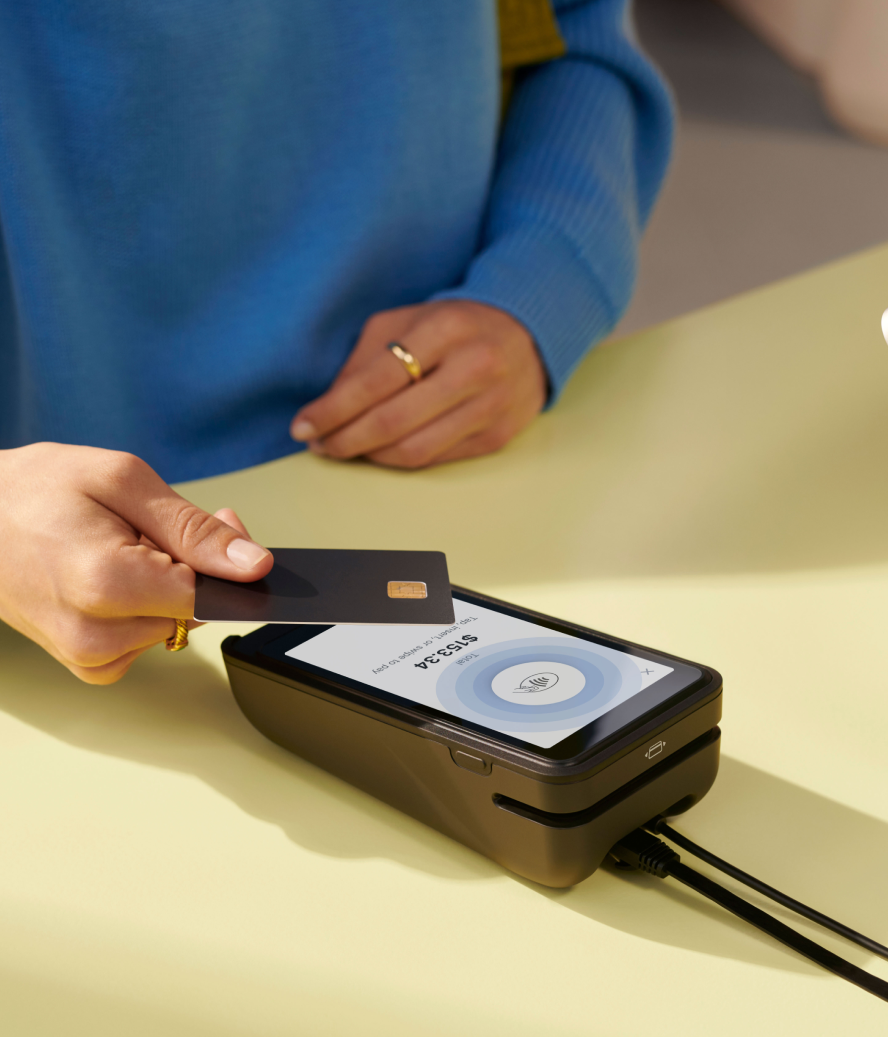

An electronic cash register (ECR) is a digital machine retailers use to calculate transactions, manage payments, and print receipts. It’s a smaller alternative to a full POS system.
Retailers today have to accommodate various retail payment options, like contactless payments and buy now, pay later(BNPL). The Richmond Fed estimates BNPL transaction value reached $70 billion in 2025 after growing about 20% per year since 2021.
This guide covers the basics of electronic cash registers and how they compare with point-of-sale (POS) systems.
What is an electronic cash register (ECR)?
An electronic cash register is a computerized countertop device retailers use to record sales, calculate totals, process payments, and store transaction data. It’s an alternative to mechanical registers because it calculates and adds sales tax to the purchase amount.
Electronic cash registers include components to manage transactions, including:
- Customer-facing display to show the total purchase amount
- Keypad to enter product prices
- Cash drawer with a key lock
- Thermal receipt printer
- Removable coin drawer
- Barcode scanner
POS systems are another checkout option for retailers. Shopify POS, for example, turns a tablet or mobile device into a checkout system that connects with retail hardware such as a cash drawer, receipt printer, barcode scanner, and card reader. The POS also syncs sales and transaction data with the same Shopify system store owners use for online selling.
Advantages of ECRs
ECRs have several advantages over traditional mechanical registers:
- Faster transactions. Programmed keys, preset tax settings, and automatic receipt printing reduce the time spent on each sale compared to a manual drawer.
- Error reduction. Store associates ring preset department keys. This automates tax and total calculations to simplify closing counts.
- Reporting capabilities. ECRs track daily sales totals, department totals, and cash drawer summaries.
- Short learning curve. Employees learn core functions like ringing sales and printing receipts with less training time.
ECRs can handle basic transactions and reporting, but Shopify POS unifies orders, inventory, payments, customer data, and sales across in-store and online channels. With the POS, retailers get real-time inventory tracking, centralized reporting, and a simpler system for staff to learn and use.
Disadvantages of ECRs
ECRs have several limitations compared to modern POS systems:
- Upfront costs. Standalone units cost between $100 and $500 on average. A POS system works on tablets you already own with a card reader that costs less than $50.
- Payment processing limitations. Basic ECRs don’t process digital wallets like Apple Pay or Google Pay without additional hardware.
- Software integrations. Standalone systems require separate software to track inventory. Allbirds connected POS inventory to online orders across 31 retail stores, and more than 50% of store-shipped products came from slower-moving inventory that stores could clear out.
- No customer insights. Cash trays don’t store customer profiles or purchase history. This blocks store owners from tracking loyalty or offering personalized discounts.
- Physical footprint. Traditional registers are fixed to a counter and take up more space than mobile-ready tablets.
- Power requirements. ECRs require a constant power source and stop processing payments during power outages.
- Business growth. Scaling a basic ECR requires manual work and additional registers to manage multiple locations or large inventories.
These rigid operational limits deter growing brands from seeing the full picture of their business. Compared to an ECR, a unified POS system centralizes orders, sales, and payments. Pepper Palace, for example, made reporting faster and easier with Shopify POS and lifted monthly gross merchandise volume (GMV) by 127%.
Electronic cash register vs. POS system
Retail speeds exceed the capabilities of standalone cash drawers. More than 60% of US retailers prioritized upgrading their point-of-sale (POS) software in 2025, according to a Verifone report.
An ECR is a checkout-first system. It’s built to ring up sales, calculate tax, and hold cash. Some models have basic reporting but don't integrate with other business tools.
A POS system integrates checkout with inventory, staff management, and customer relationship management (CRM). Retailers using a unified commerce approach reduce their total cost of ownership by 22%, according to a 2025 study.
| Category | Electronic cash register | POS system |
|---|---|---|
| Payment methods |
|
|
| Inventory tracking | Staff updates inventory counts manually. |
|
| Sales reports | Shows daily totals, cash drawer reports, and tax summaries. | Tracks sales by product, vendor, and location. |
| Mobility | Stationary. | Works on mobile devices and at pop-ups. |
| Scalability | Suits single locations. | Manages multiple registers and locations with synced inventory. |
| Integration | Lacks connection to ecommerce or accounting software. | Connects checkout to the retail tech stack. |
| Customer data | Minimal. | Stores customer profiles, purchase history, and shipping addresses. |
Decision framework
CSI Works’ 2025 field research of 318 independent consumer goods retailers found that 42% use electronic cash registers. ECRs can handle basic transactions, but a POS system supports businesses as they scale.
Use the following framework to decide which hardware fits your store.
Choose an electronic cash register if you:
- Ring up in-person sales only
- Process sales at one fixed counter
- Track inventory in a separate system
- Don't need online sync or customer profiles
- Require basic daily sales totals
Select a POS system if you:
- Accept digital wallets, gift cards, and installments
- Update inventory in real time
- Sell both online and in person
- Need mobile checkout for the sales floor
- Store customer profiles and marketing data
- Track which products move fastest
Why POS systems are replacing traditional cash registers

Whether you’re selling products at pop-up markets, a permanent store, or multiple locations, a POS system manages payments and business operations. These systems provide features that electronic cash registers lack.
For example, baby furniture retailer Bambi Baby used Shopify POS to connect five retail locations with its ecommerce operations. Within four months, they increased conversion rates by 30%, grew average order value by 30%, and reduced in-store checkout times from several minutes to seconds.
Benefits of using a POS system for retail
Managing a store manually involves complex data that is difficult to track accurately. A POS system organizes these details in one place, which has several benefits for operational efficiency.
Centralized inventory and order management
Whether you have one location or 10, or oversee an omnichannel retail business, an integrated POS system makes keeping track of inventory effortless. The data is centralized, so whenever you make a sale, the numbers update across channels.
Shopify POS comes with tools to help control and manage inventory across multiple store locations, your online store, and your warehouse. Forecast demand, set low-stock alerts, create purchase orders, know which items are selling or sitting on shelves, count inventory, and more.
Travel retailer Bentley used Shopify and Shopify POS to unify inventory and sales data across more than 125 stores. After the move, Bentley saw 129% year-over-year revenue growth and 17% growth in POS transactions.
“The redesigned product pages and real-time inventory visibility have made a big difference for our customers—they can easily see what's available in-store," says Guillaume Langelier, IT technician at Bentley. “We have full control over our site and can innovate quickly, which wasn’t possible before.”
Better customer insights and loyalty tools
Keeping track of your customers makes it easier to stay in touch with personalized post-purchase emails and other marketing tactics. Staying top of mind can help boost repeat orders and customer loyalty.
With Shopify POS, apparel and accessories retailer Rudsak centralized customer data, giving store associates the information they needed to personalize in-store service and support follow-up experiences like returns and warranty lookups. The brand captures double the customer data and has cut in-store transaction time in half.
“We want every customer who walks into our store to know they’re important to us. For Rudsak, unifying our customer data with Shopify POS was a crucial piece of that puzzle,” says Rani Hawli, chief financial officer for Rudsak.
Flexible and mobile checkout experiences

Process sales anywhere in your store using mobile POS hardware. Use a smartphone-sized system to accept card payments, gift cards, and digital wallets like Apple Pay or Google Pay.
Faster checkouts help you complete more sales in a day. Shopify POS also manages buy online, pickup in-store (BOPIS) orders and returns across different channels.
Weebot operates Shopify POS on mobile tablets so store staff can finalize sales while moving through the store with customers, reducing wait times and making checkout more personal. After adopting Shopify POS, Weebot saw a 50% reduction in processing time and a 15% increase in retail revenue.
“Our store teams can now upsell and cross-sell accessories with ease, thanks to Shopify POS. The ability to suggest compatible products right at checkout has had a clear impact on revenue,” says Pierre Asteix, operations director at Weebot.
Real-time reporting and analytics
Monitor your business across online and offline channels by reviewing your transaction history in one place. These insights are available from any device that’s using the Shopify POS app.
Astrid & Miyu uses Shopify POS to access in-store data across 23 brick-and-mortar locations. Since implementing Shopify POS, the jewelry brand has seen a fivefold increase in customers purchasing four or more times when shopping omnichannel.
“Shopify POS really helps the store teams to enhance the customer experience. For me, as an area manager, it helps me to be able to get data in real time across multiple locations,” says Marsha Sharrier, area manager at Astrid & Miyu.
Scalable operations for growing retailers
As your business grows, you’ll hire and train more staff, add more products, and open more store locations. A POS system will have hardware and software that scales with your business.
With Shopify, it’s easy to customize your POS system and extend its capabilities. Find apps built by our trusted partners in the Shopify App Store to help you do anything—from counting foot traffic to launching a loyalty program and more.
Shopify POS can also help growing retailers manage expansion across multiple locations. South African sneaker brand Bathu used Shopify POS to support more than 30 stores, manage over 200 retail staff, and unify online and in-store inventory. After moving to Shopify, Bathu increased revenue by 26% and made plans for international expansion.
“Once we made the move to Shopify POS, we never looked back,” says Mario Toscano, technology & innovation manager at Bathu. “It’s been such a game changer for the business. It couldn’t have been easier. You add a new location onto the point of sale, get the point of sale registered on that location, and everything is set up in just minutes.”
Electronic cash register FAQ
What is the easiest cash register to use?
The easiest cash register has a simple interface, preset product keys, automatic tax calculation, and a built-in receipt printer. Store owners who track inventory, accept digital payments, or manage customer data find a POS system easier because it keeps checkout and store operations in one place.
Is a license needed to operate a cash register?
Staff don’t need a license to operate a cash register. A business needs a business license, sales tax permit, or local registration to sell products and collect sales tax. Requirements depend on their location and business type.
Can a computer be used as a cash register?
Yes, you can use your computer as a cash register. There are a variety of different software solutions available for purchase that can be used to set up a virtual cash register.
What can be used instead of a cash register?
Depending on the environment and type of sales, there are a number of other options that can be used instead of a cash register.
These include:
- Point-of-sale (POS) systems
- Mobile payment systems
- Electronic cash drawers
- Touchscreen kiosks
- Barcode scanners
- Inventory management systems
- Automated checkout systems
- Online payment systems (e.g., PayPal, Stripe)
How do electric cash registers work?
Electric cash registers work by using a keyboard on the register to enter items purchased, prices, and other information into the register’s memory. The register then calculates the total cost of the items and displays it for the customer.
An electronic cash register also records the transaction in its memory. When the transaction is complete, the customer pays by cash, credit/debit card, or other payment methods. The register then prints out a receipt for the customer and finalizes the daily sales report for end-of-day reconciliation.


