Year by year, the fashion ecommerce space keeps changing. In 2023, we’re seeing ecommerce fashion trends like personalized customer journeys, the focus on sustainability, the rise of social commerce, and the undying love for in-person shopping.
But one thing hasn’t changed: the global ecommerce fashion industry is growing, and there’s no end to that growth in sight. Global ecommerce sales for fashion brands are predicted to reach over $1.2 trillion by 2027.
In other words: It’s never been a better time to be an ecommerce fashion brand.
If you want to know what it looks like to master the art of selling online, you’re in the right place. Get ready to swipe ideas and concepts for your own online store, including website features and marketing strategies.
1. Tecovas
Tecovas offers beautiful, handmade western boots and accessories for men and women. The brand prides itself on its high standards of quality, comfort, fit, and style, which is why its team goes through more than 200 steps to make a single boot by hand.
Aside from its website, Tecovas welcomes customers into more than 30 stores in Texas and country-wide.
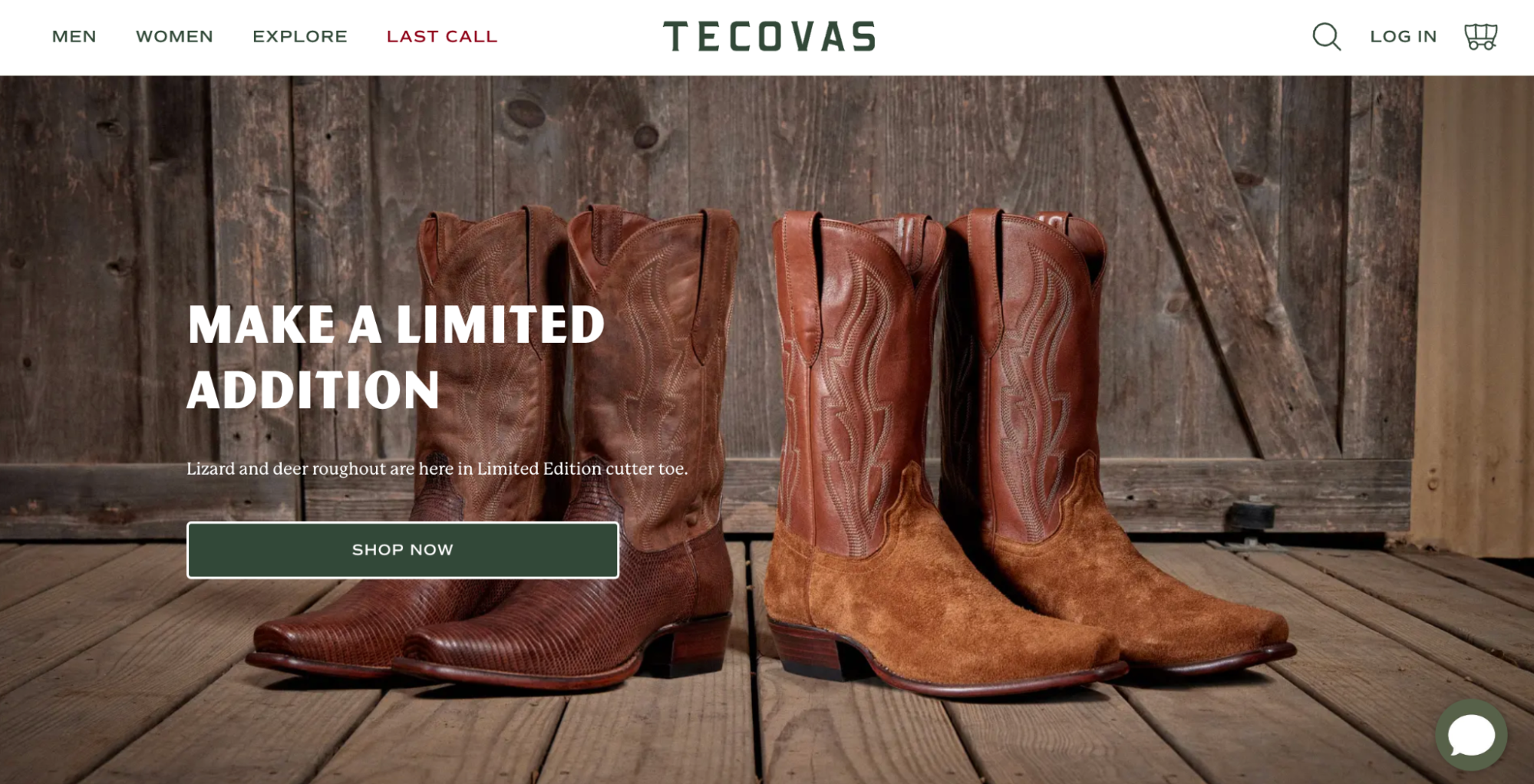
The Tecovas homepage
Why the Tecovas ecommerce website works well
The Tecovas website is visually appealing and user friendly, using lifestyle photography to perfectly reflect the Tecovas message, aesthetic, and values. Every inch of color, images, or text reminds you that you’re in a place that celebrates the cowboy lifestyle.
Rustic colors, bold messages of confidence (“Pull on a great pair of boots knowing there’s nothing more cowboy than going your own way”), and rich visuals are embedded throughout the website.
This naturally includes the homepage and product pages, but also its blog, a style fit quiz, and the story behind the brand.
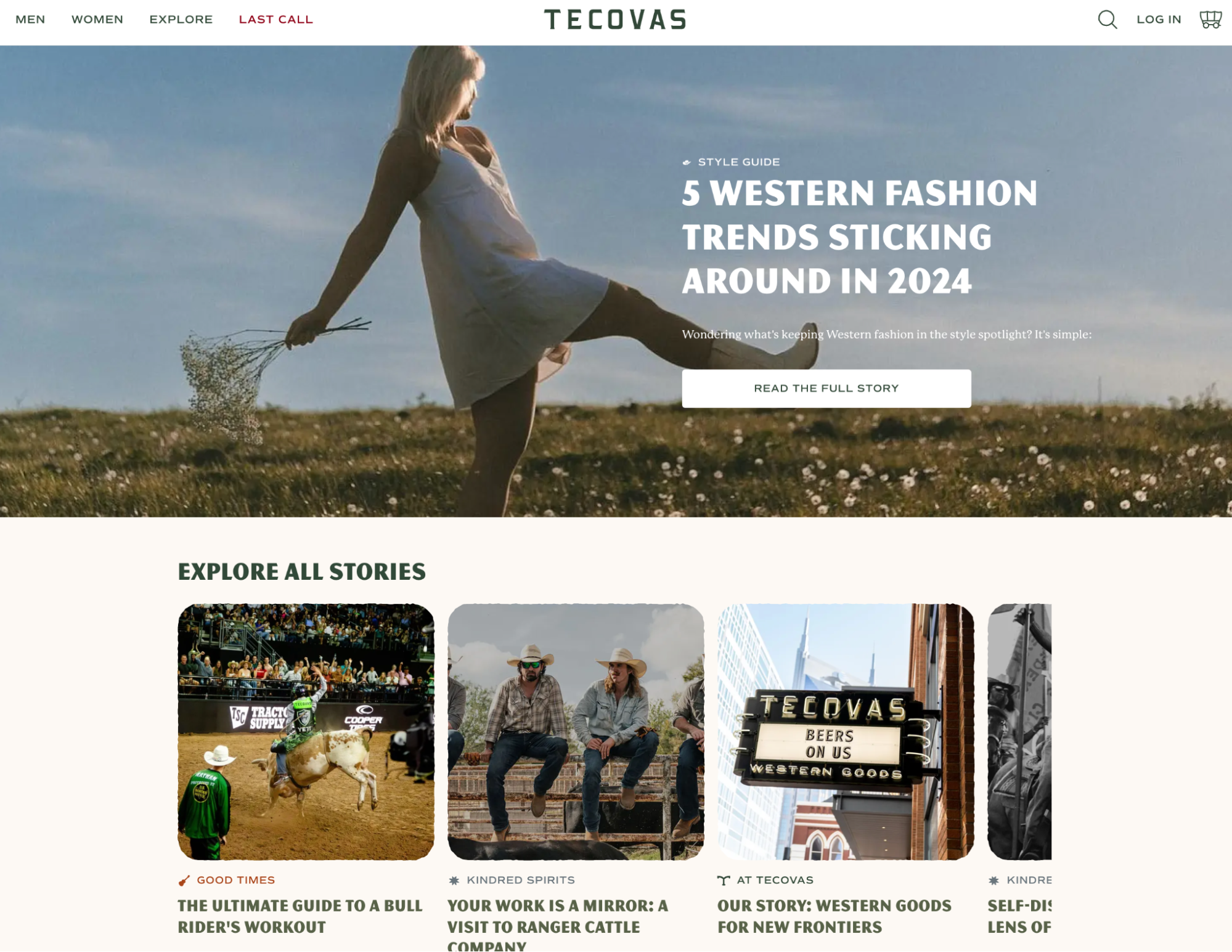
The blog run by Tecovas.
People who’ve entered the world of Tecovas would recognize it anywhere. The team running Tecovas knows why its customers love it and what it takes to stand out.
2. Peepers
Peepers sells eyeglasses, including reading glasses, sunglasses, and blue light glasses. What makes these glasses unique is the sheer number of options to choose from: colors, shapes, width, and materials make for hundreds of ways glasses-wearers can express themselves.
Although the brand was founded in 1993, it provides a modern, seamless shopping experience for a product that’s hard to shop for, even at your local optician’s store. It’s a challenge to find glasses that match your style and face shape; what Peepers achieved is no small feat.
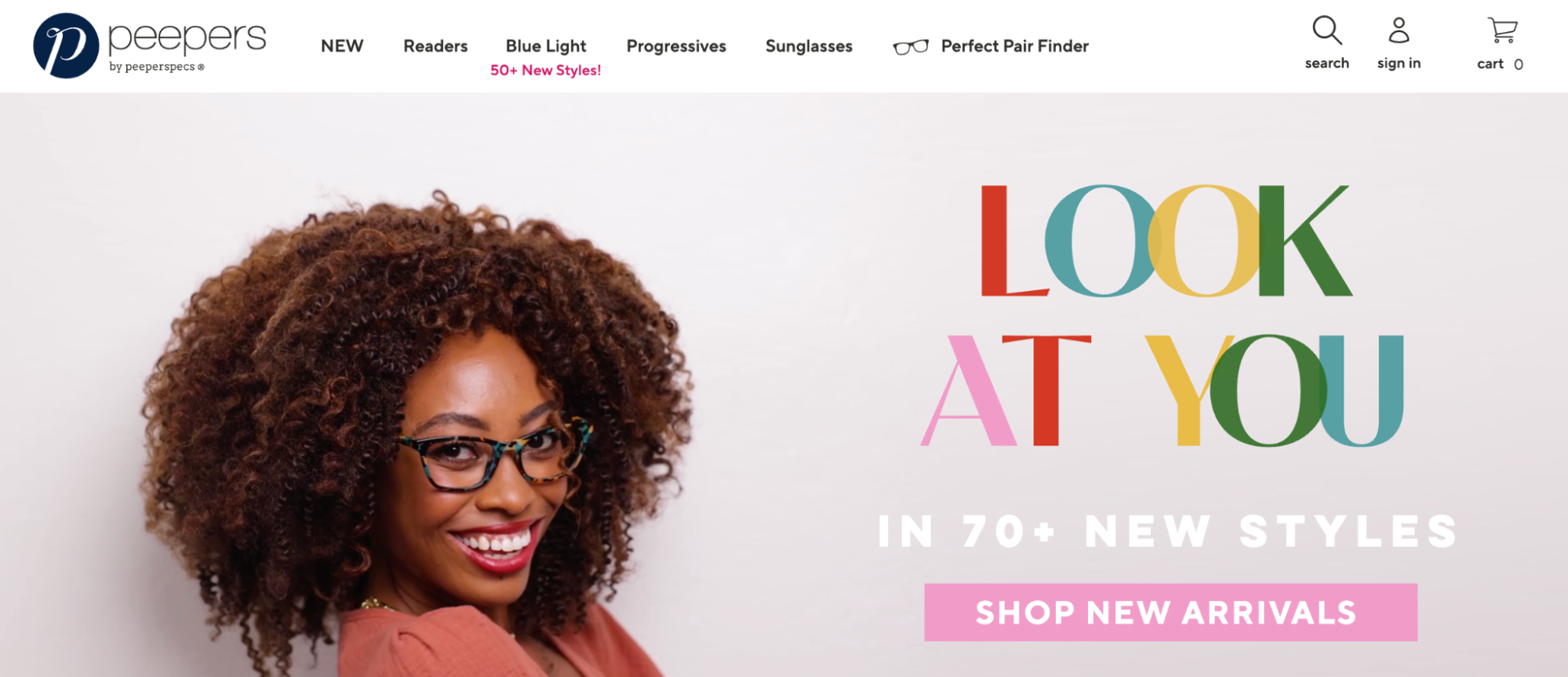
The Peepers homepage.
Why the Peepers ecommerce website works well
First, to narrow down from over 100 styles, Peepers gives you filters for shapes (like round, cat’s eye, square), width (narrow, average, or wide), and material (eco-friendly or plastic). Based on whether you’re looking for progressives, readers, or no correction, you can start browsing styles that match your criteria.
On each product page you view close-up product images as well as a video of a model’s head turning side to side, which gives you a good idea of what those glasses look like in use.
Then, a bit of scrolling gives you the exact measurements for that model, including frame width, eye size, temple length, frame height, and nose bridge. And if that’s not enough, you can use the virtual try-on feature, which lets you use your camera to see what those glasses would look like on your face.
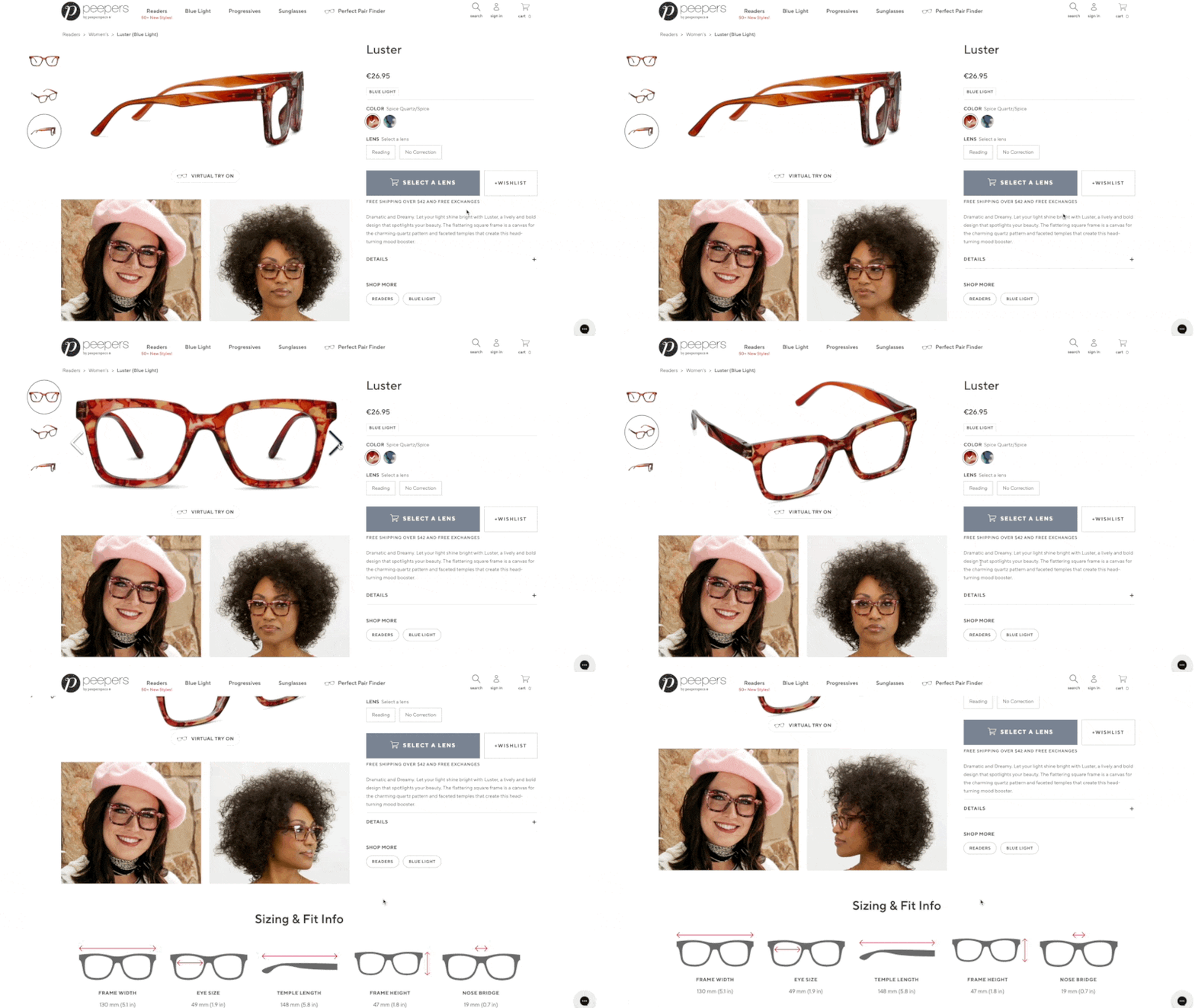
Peepers’ product page with rich images and a video. Bonus read: Check out how Peepers increased conversions by 30% with a custom checkout.
3. Petal & Pup
Petal & Pup is an Australian apparel brand for women. It started as a small family business and grew into an international couture name. From formal dresses and workwear through to casual dresses and wardrobe staples, Petal & Pup built a name of stylish yet affordable fashion pieces.
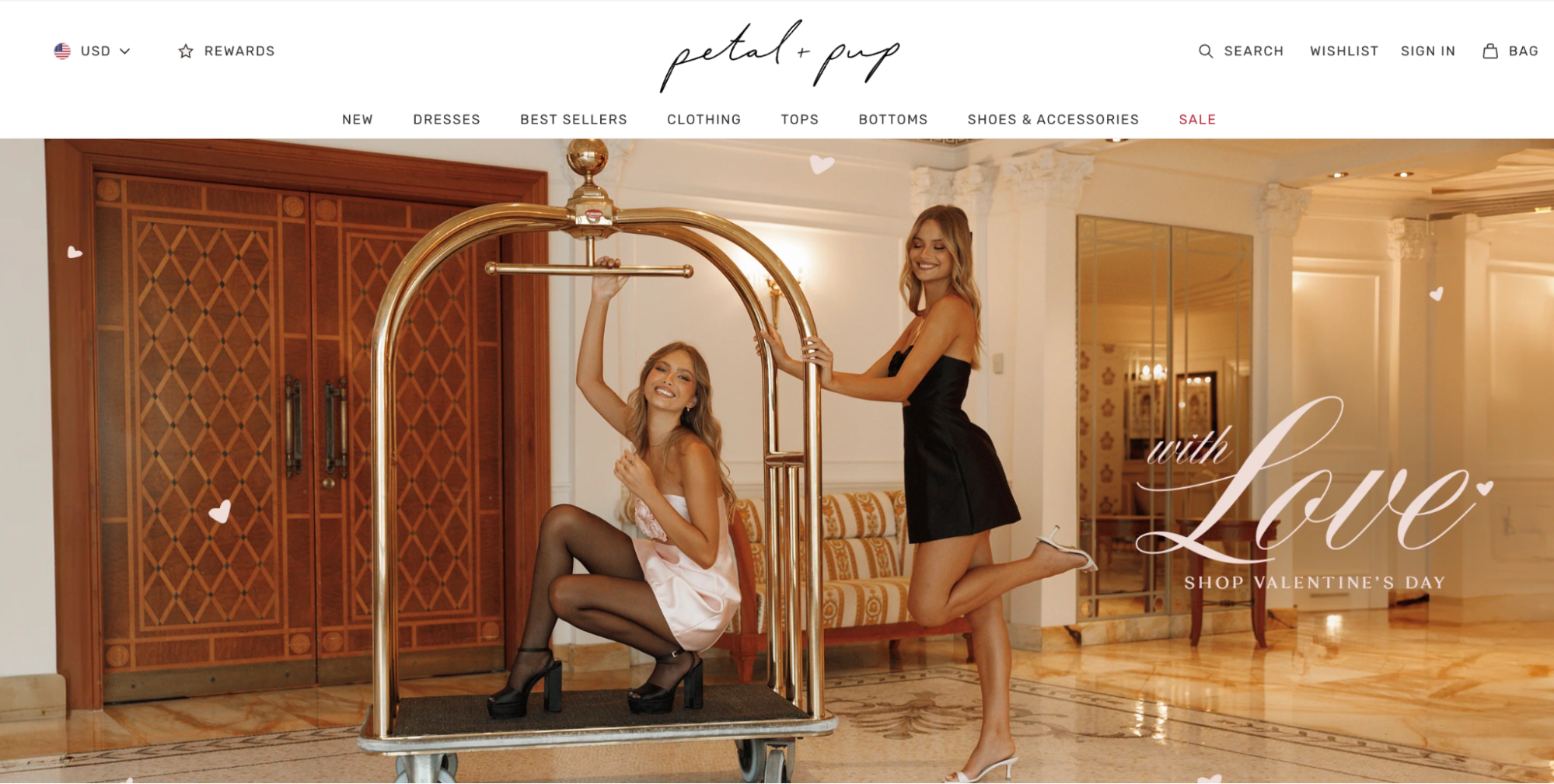
The Petal & Pup homepage.
Why the Petal & Pup ecommerce website works well
The challenge of shopping for quality, lasting pieces online is always the same: finding items that feel right and match your exact size and body type.
There are several things Petal & Pup’s product pages do well to help visitors find the perfect products and sizes.
First, the product description is detailed, listing specifics like length, neckline, adjustable straps, lining, fit, and fabric type in the form of bullet points.
Then, there’s a section with the measurements of the model wearing the item in product photos, along with the size they’re wearing—helpful for understanding the true fit of the product.
Visitors also have the option to fill out a fit finder quiz, which then suggests the right size based on the answers. For example, for an item labeled as “true to size,” you’ll see a recommended size 10, but a size 8 for the one that runs small—all based on the same quiz results.
And finally, Petal & Pup’s products often come with hundreds of reviews, which can be filtered based on what customers mentioned in the review, including fit, quality, fabric, stretch, cut, and more.
It’s the perfect combo for helping customers make informed purchase decisions.
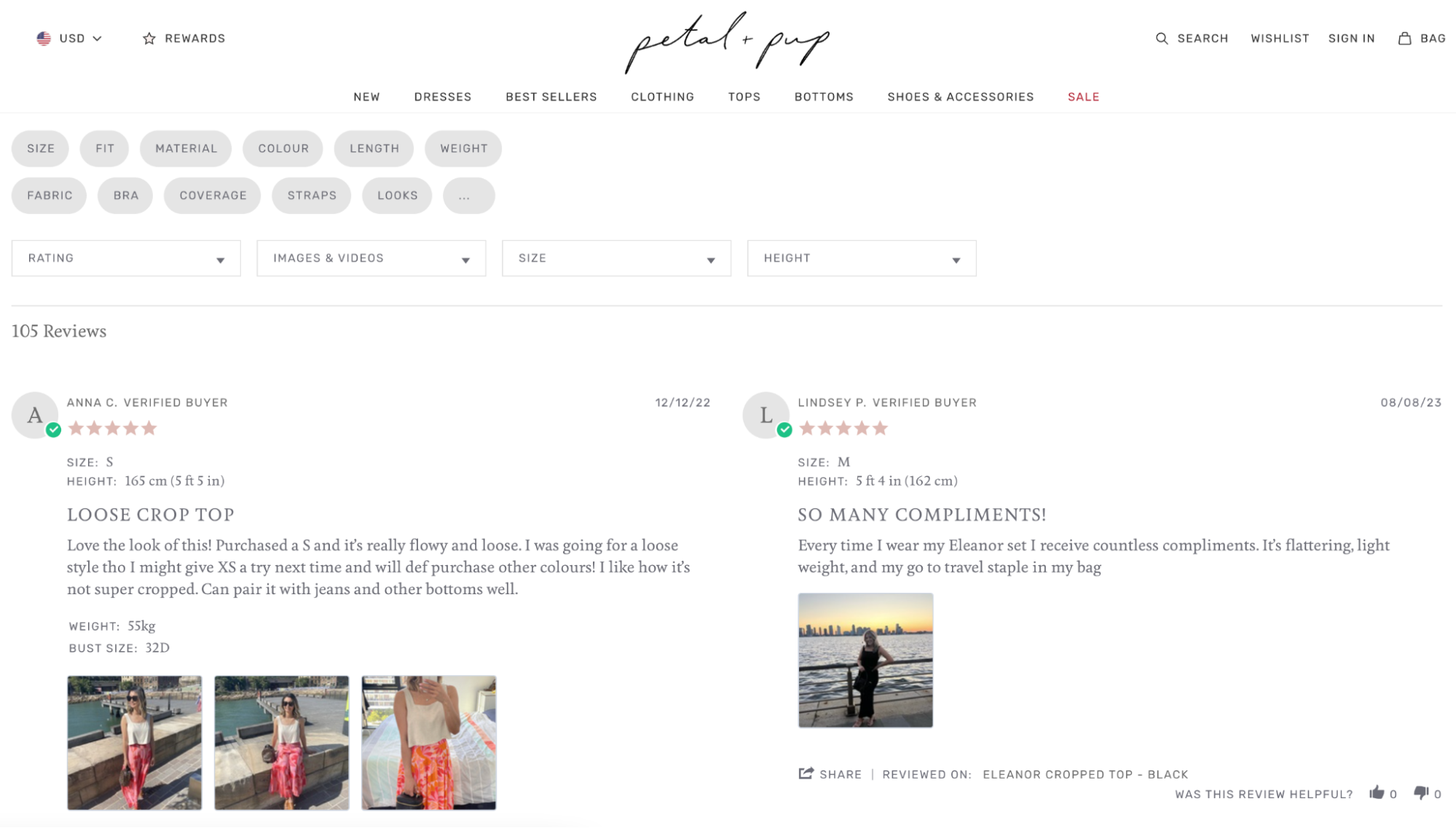
Petal & Pup product page with features like description and reviews.
4. cheak
Activewear brand cheak focuses on high-quality fabrics and the right fit, offering a diverse range of sizes (from XXS to XXL). Before becoming cheak, the brand started out under the name “butter.”
In 2022, cheak merged with Love, Bonito, becoming the official activewear line of one of Singapore’s largest fashion retailers.
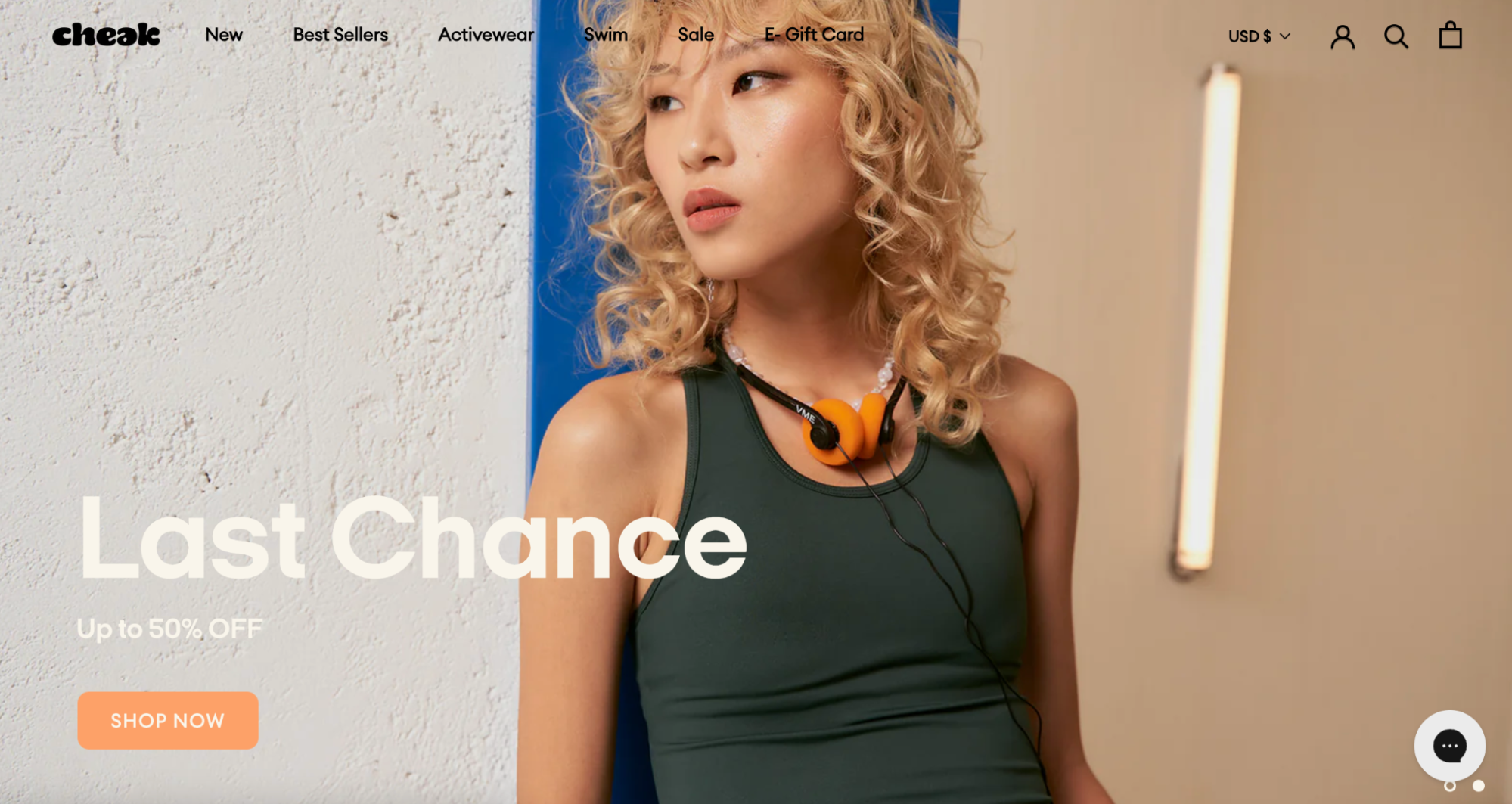
The cheak homepage.
Why the cheak ecommerce website works well
Cheak’s website provides a smooth, enjoyable shopping experience.
When a customer adds products to their cart, they can see their cart contents on the right side, without leaving the page they’re on. They can continue browsing and shopping, or they can click the checkout button to complete their purchase.
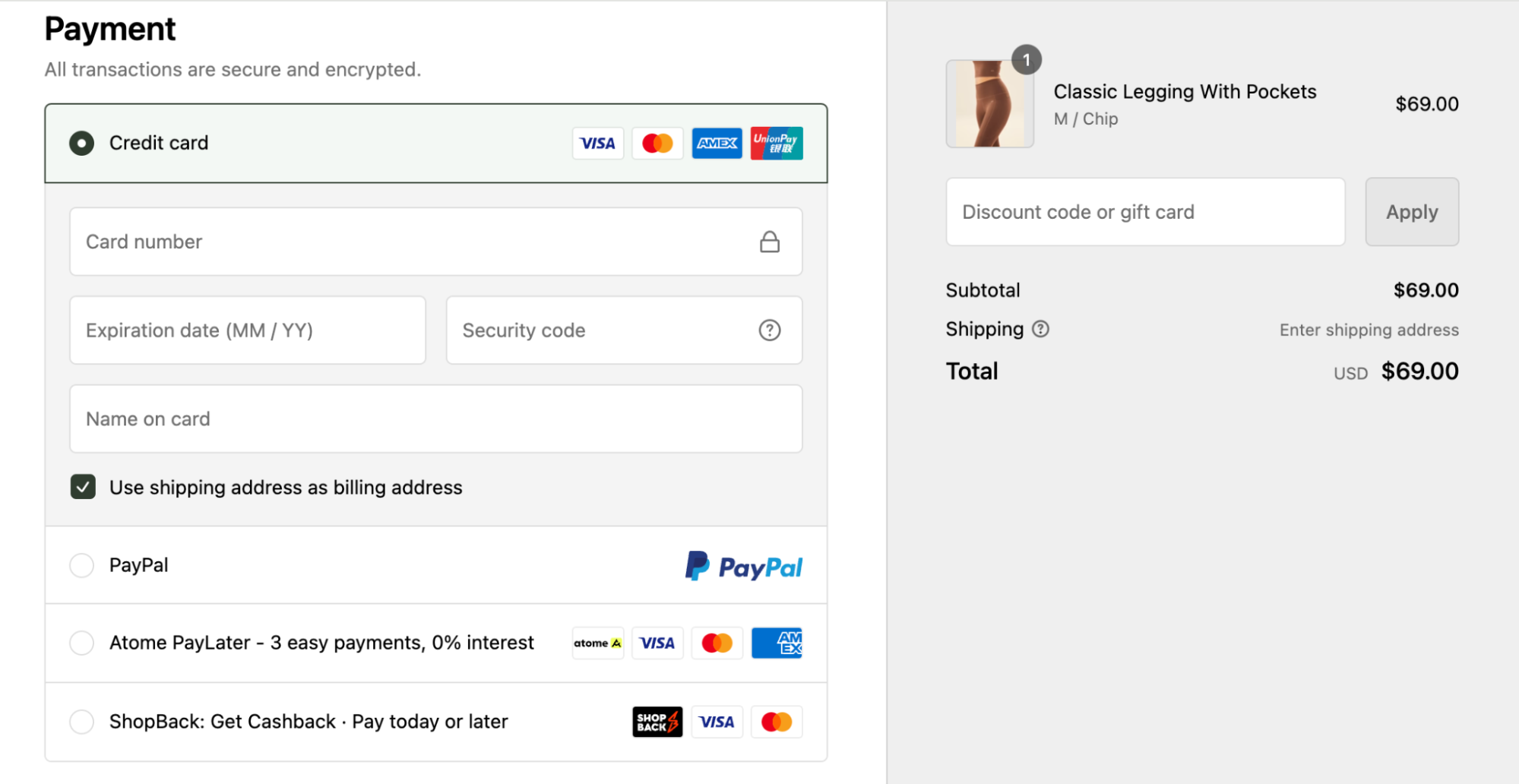
cheak’s checkout page with multiple payment options.
The latter takes them to a fast, seamless checkout process. After entering their email and shipping address, customers can choose between several secure, encrypted payment options.
This includes credit cards (Visa, Amex, Mastercard, and UnionPay), PayPal, Atome PayLater (Singapore’s buy now, pay later solution), and ShopBack (another buy now, pay later solution).
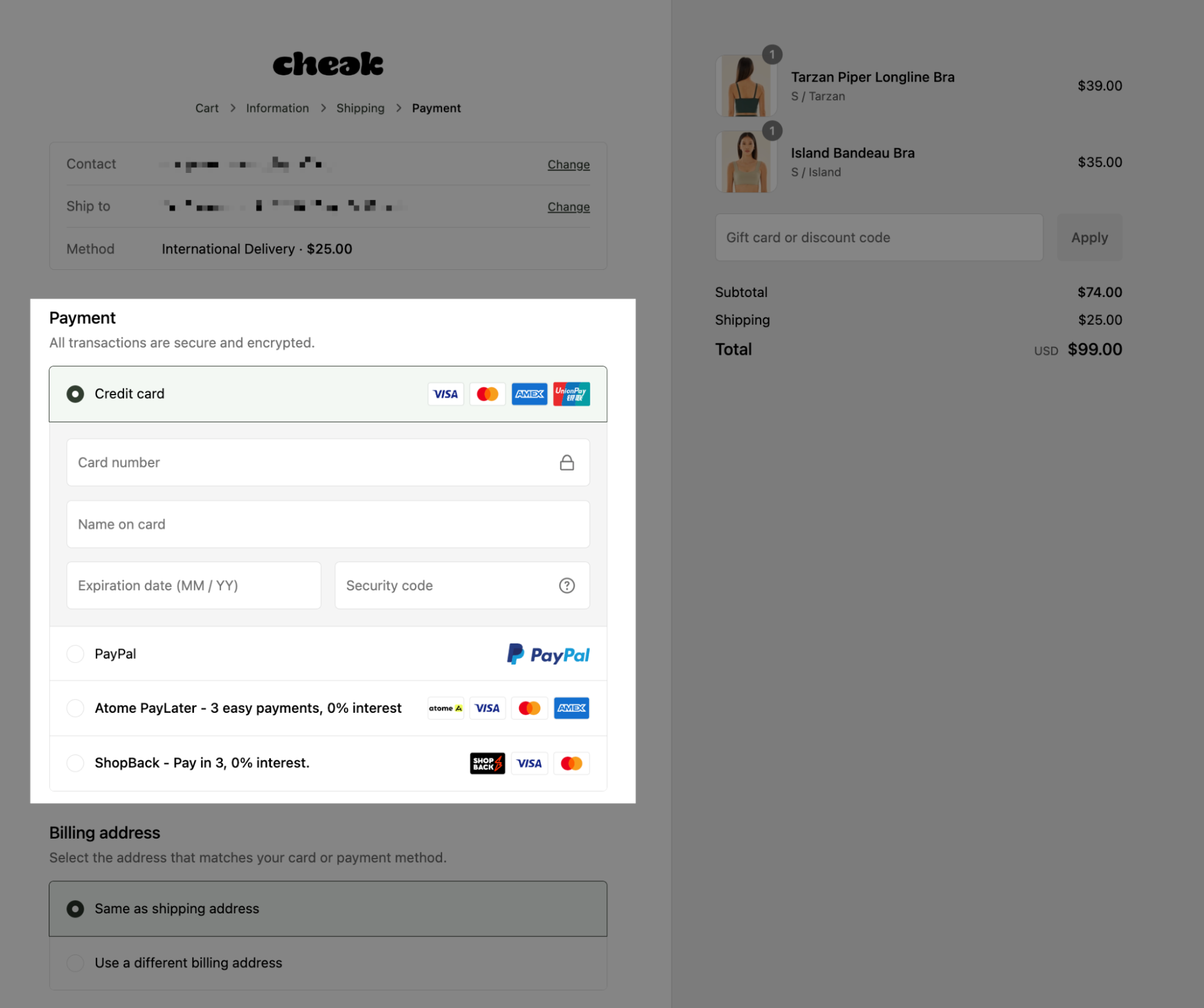
cheak’s checkout page with multiple payment options.
In other words, customers get to choose the right payment option for them, including paying in installments using a provider they already know and trust. It’s easy, fast, and simple—they can complete their shopping journey in mere moments.
Bonus read: Check out how cheak boosts customer reach and engagement at scale with Shopify Plus.
5. UNTUCKit
UNTUCKit is a brand of men’s shirts designed to be worn casually—untucked. Untucked length, different fits for different shapes and sizes, a contoured hemline, and reinforced collars—all of these features make UNTUCKit stand out among fashion brands that cater to men.
UNTUCKit has more than 80 stores across the United States, Canada, and the United Kingdom, prioritizing an engaging shopping experience both online and in-person.
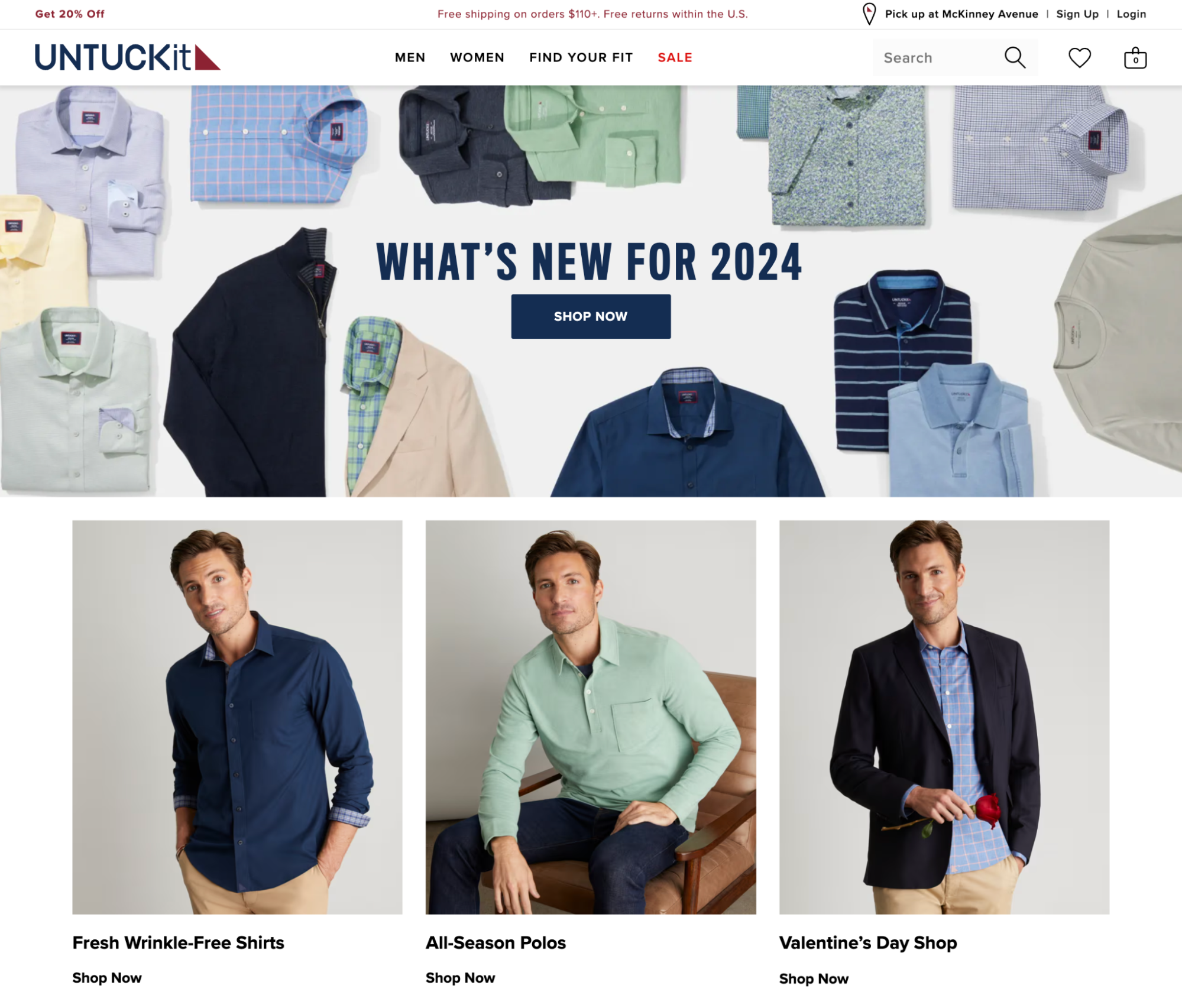
The UNTUCKit homepage.
Why the UNTUCKit ecommerce website works well
The promise of a shirt that fits just right is a big one. How can a brand keep that promise without seeing the customer in person?
UNTUCKit’s answer: A personalized shopping journey powered by a shopping account that stores the customer’s measurements and wish list items.
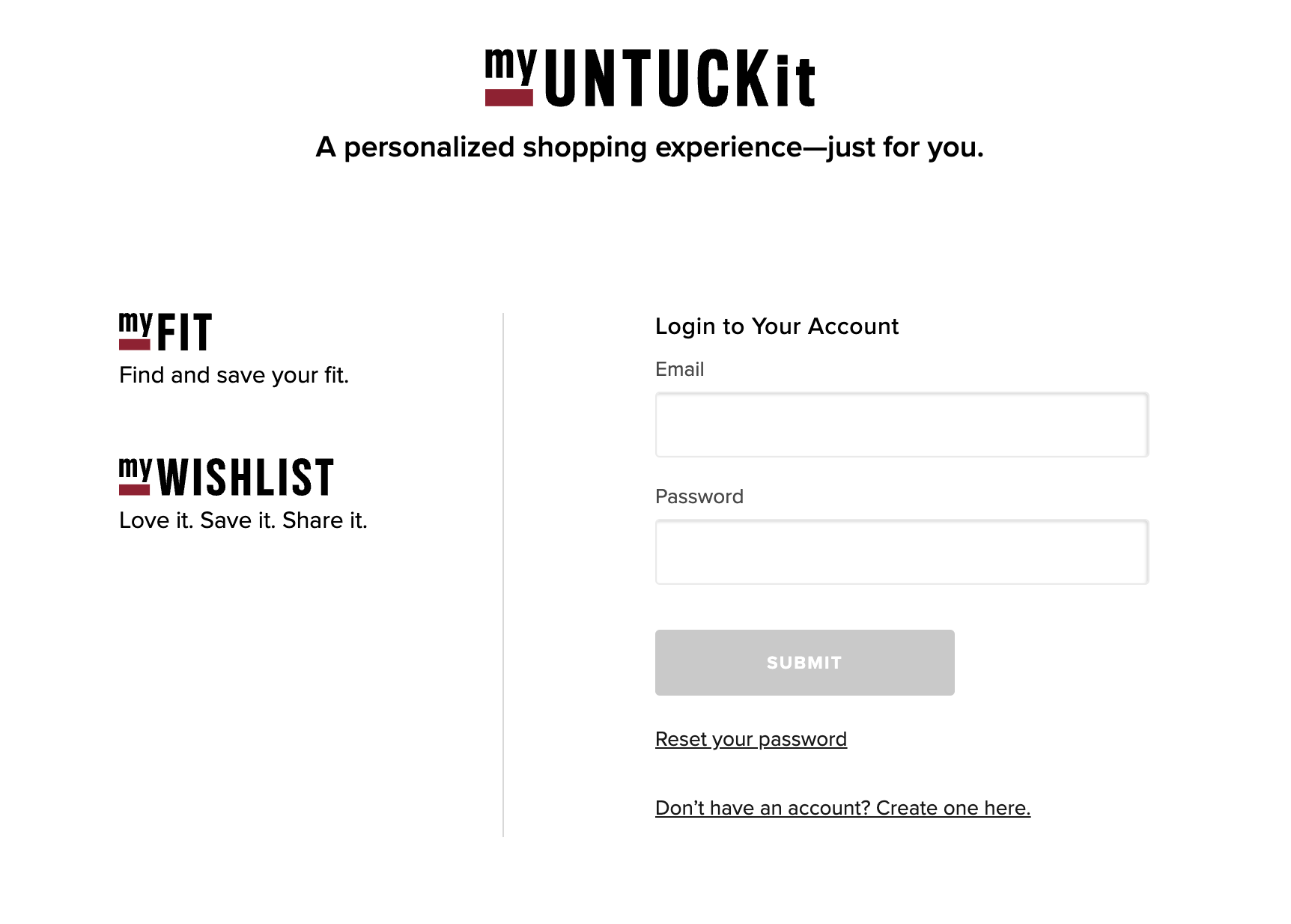
UNTUCKit’s customer account.
Once they create their account, customers can answer a few questions about their shape and fit preferences. The results give them a few options for their UNTUCKit fit, like medium regular fit and medium slim fit, which they can then add to their account.
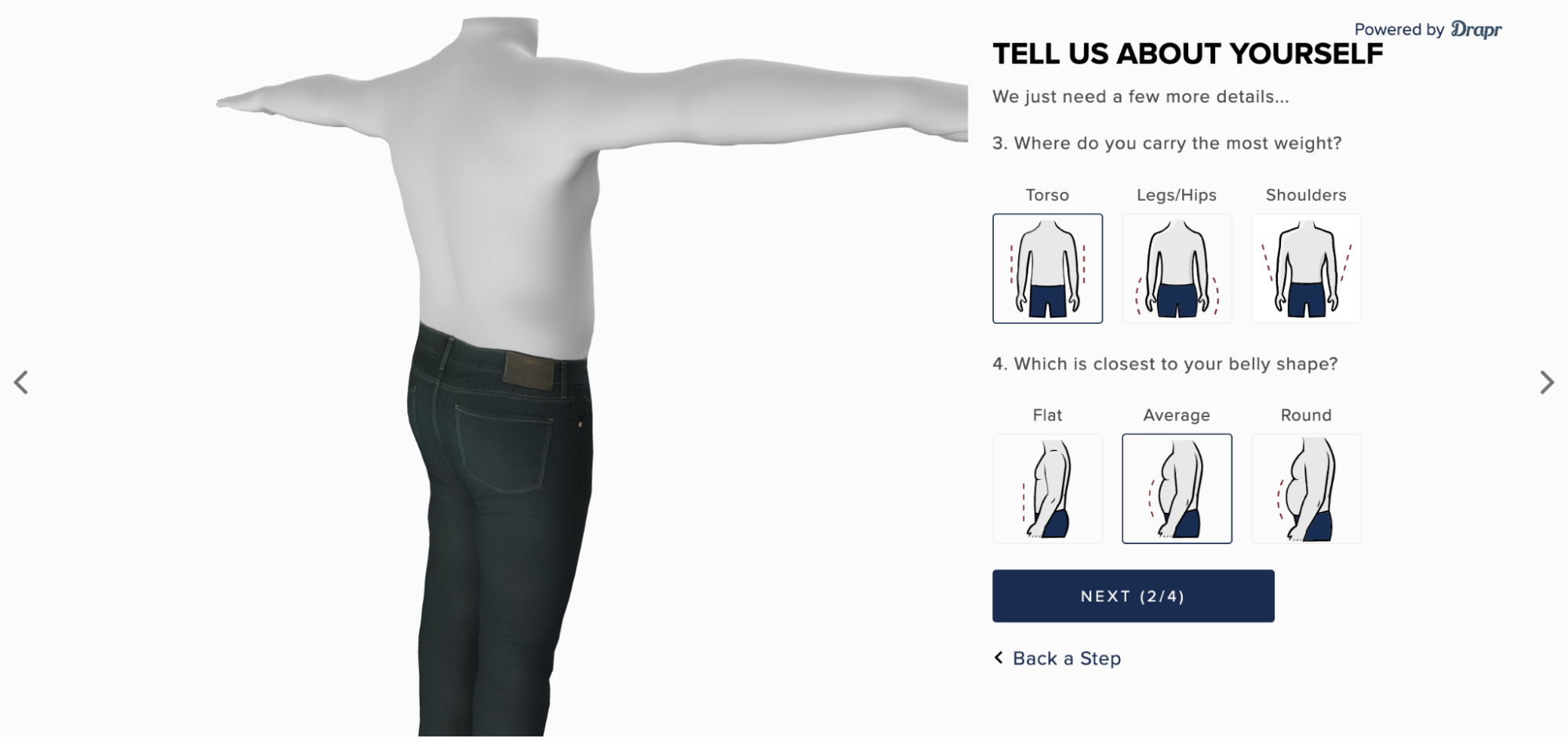
UNTUCKit’s fit finder quiz
From there, it’s as easy as clicking on the “Shop this fit” button as the website lists all the shirts available in that size and fit.
Not just that: The product page automatically enters that size and fit, which makes shopping a breeze. Personalized shopping and recommendations for the win.
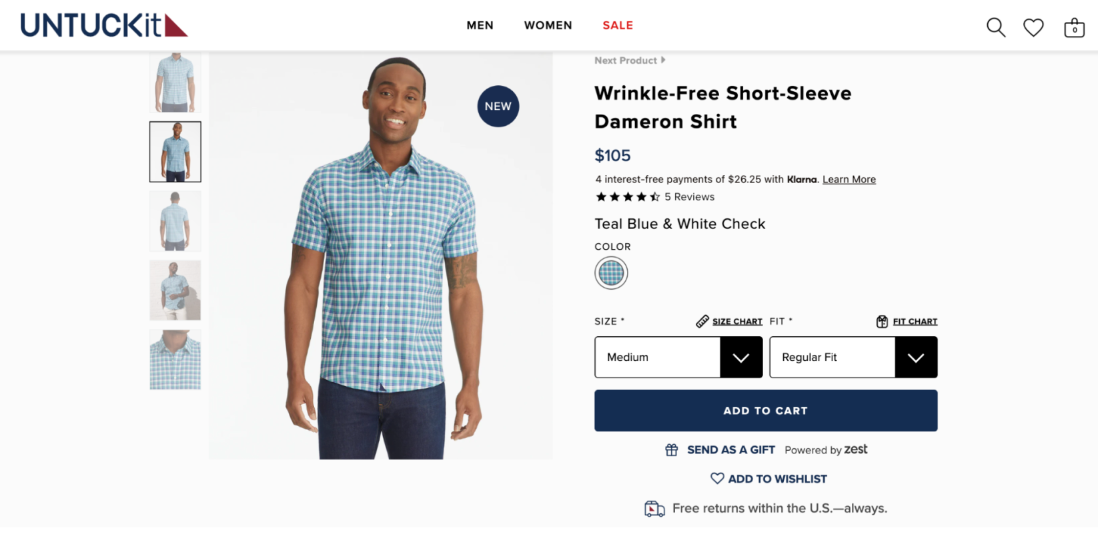
UNTUCKit’s automatically suggested shirt size and fit.
6. SKIMS
SKIMS is a fashion brand known for its shapewear, loungewear, and underwear products in a broad variety of sizes and skin tones. Kim Kardashian co-founded SKIMS in 2019 with entrepreneurs Jens and Emma Grede, growing it to a $4 billion valuation in just four years.
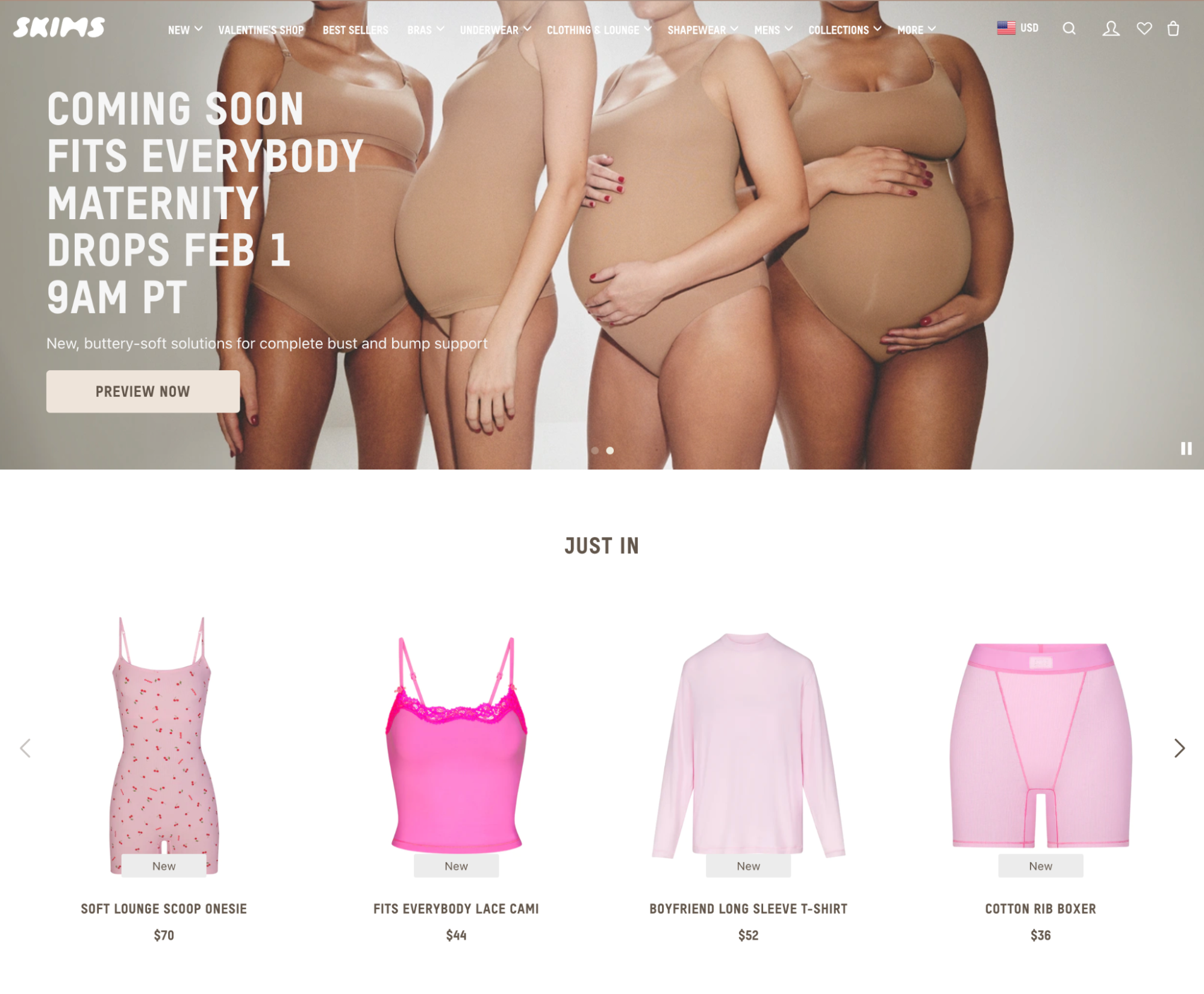
The SKIMS homepage.
Why the SKIMS ecommerce website works well
The SKIMS shopping experience is a rich one: products come in dozens of sizes and varieties, and product pages are optimized to help customers complete their look with matching products. There’s also an option to pay for products with installments, view sizing information, shipping details, and returns options.
The best part is it’s all perfectly easy to navigate on small screens like smartphones and different devices in general. Product images, sizing examples, cart navigation, customer reviews—they’re just a tap away on a smartphone, without an experience crowded or overwhelming.
Considering how big of a role social media plays in successes of both Kim Kardashian and her business ventures, mobile friendliness and a responsive design are crucial to convert those social media visitors into customers.
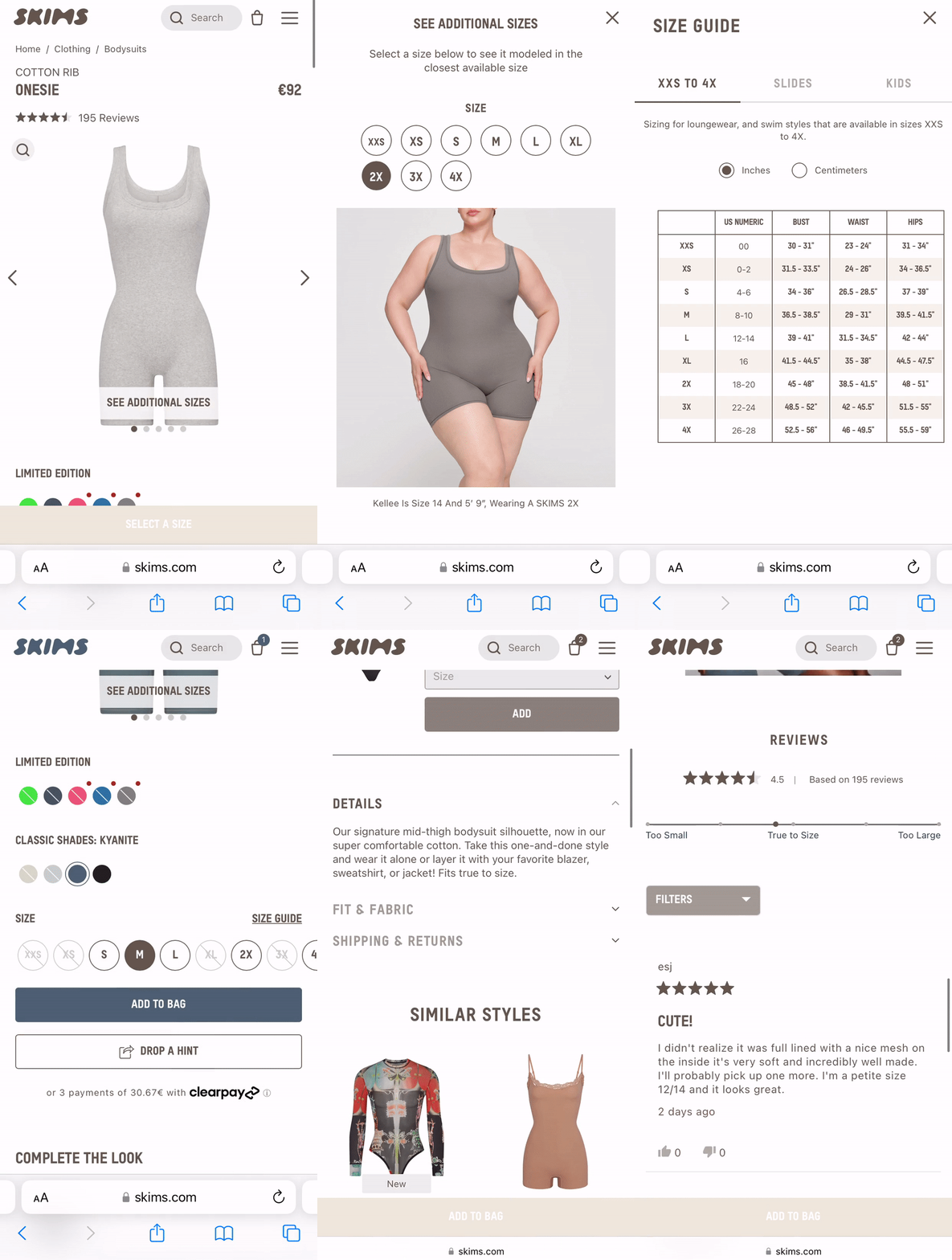
Mobile experience on the SKIMS website.
7. Pepper
Pepper is a brand of better-fitting bras for AA, A, and B cups. “Bras for small boobs” sits proudly at the top of Pepper’s homepage, promising exceptionally fitting bras without any cup gaps.
Pepper is about confidence and pride, with products that flatter the natural shape of a small-chested body.
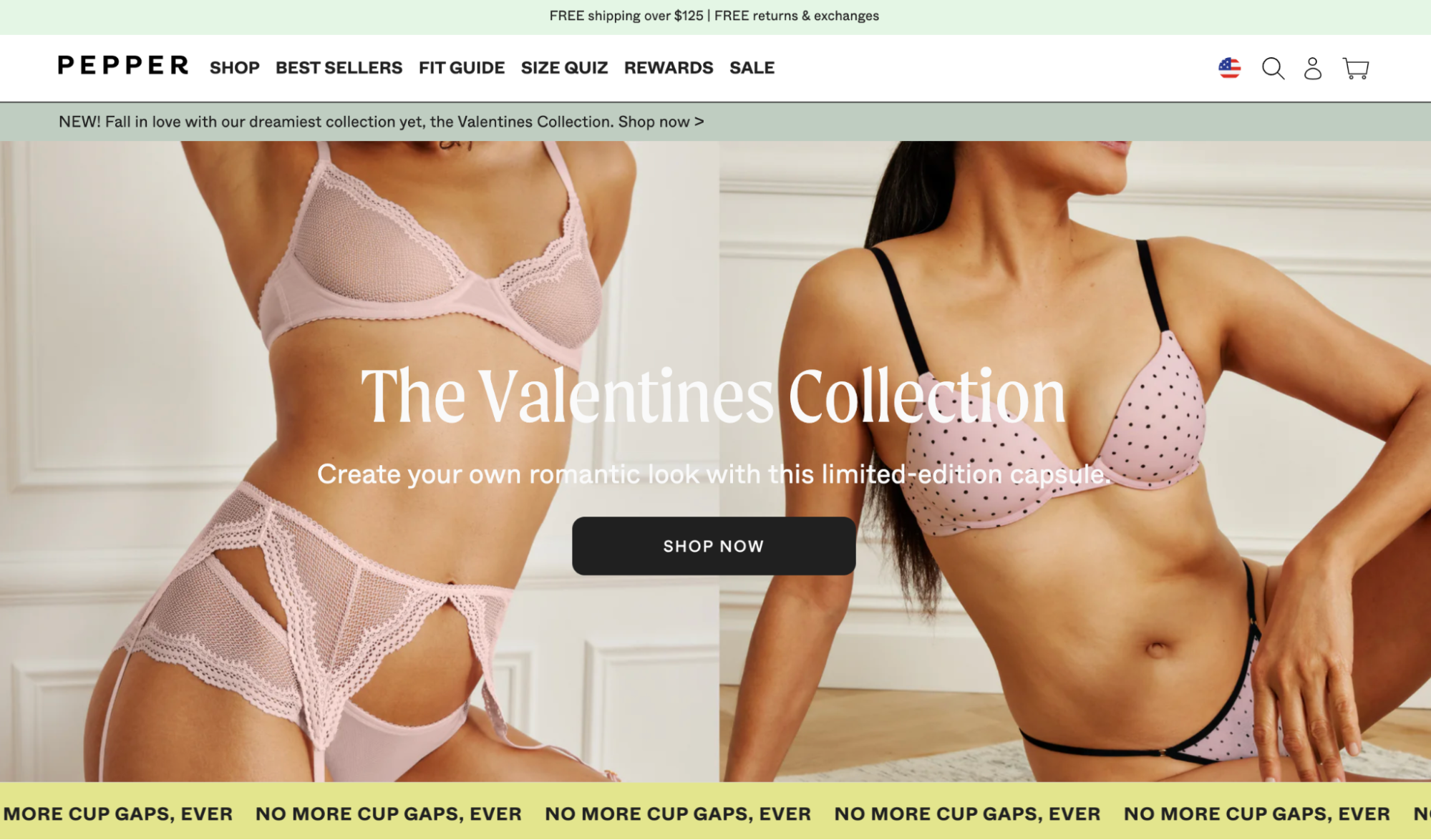
The Pepper homepage.
Why the Pepper ecommerce website works well
Pepper is talking to a specific audience, aiming to solve a very specific problem. Its target customer has likely already tried it all—brands, styles, and hacks—with little or no success, simply accepting there’s no bra that fits their small chest just right.
This is where Pepper’s return policy comes in, asking customers to return or exchange their products for free (in the United States) within 30 days. You might be thinking: That’s a standard return policy—what’s so special about it?
Here’s what: Even though Pepper equips visitors with a size chart, a fit guide, and a size quiz, it encourages customers to purchase multiple products and sizes to try them at home.
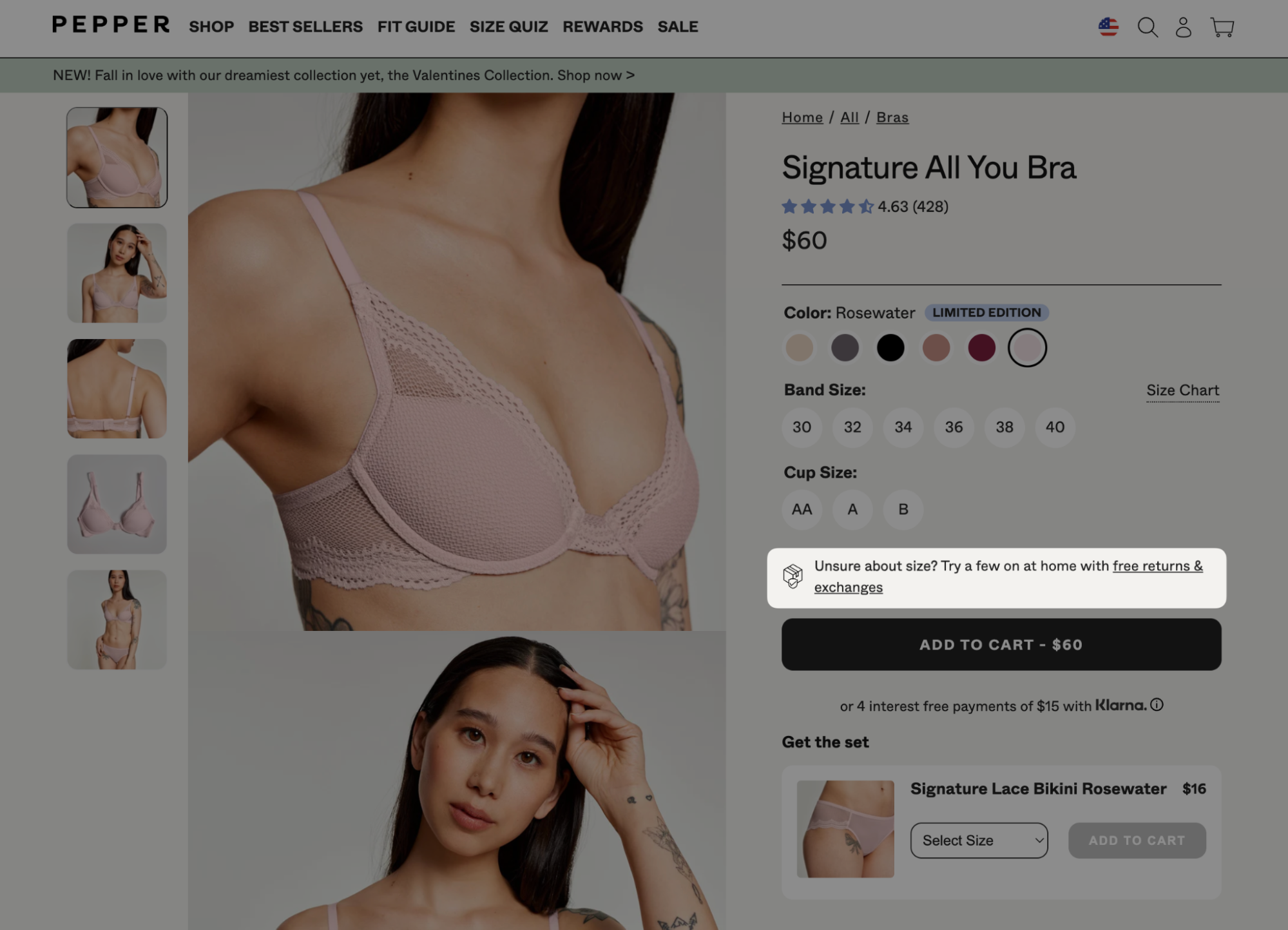
Pepper’s message to order more than one size.
With the cost of shipping, processing, and restocking returned items, returns are a cost to the business. Pepper shows a strong commitment to customer happiness by taking this approach.
8. Gymshark
Gymshark is a household name for gym clothes and workout wear. Founded in 2012 by Ben Francis, a 19-year-old at the time, Gymshark now earns more than $600 million in yearly revenue and is valued at $1.3 billion.
One of the key strategies that helped turn Gymshark into the successful company it is today was its early focus on influencers—body builders, boxers, runners, and powerlifters—to get the brand in front of everyday people who happen to be gym enthusiasts.
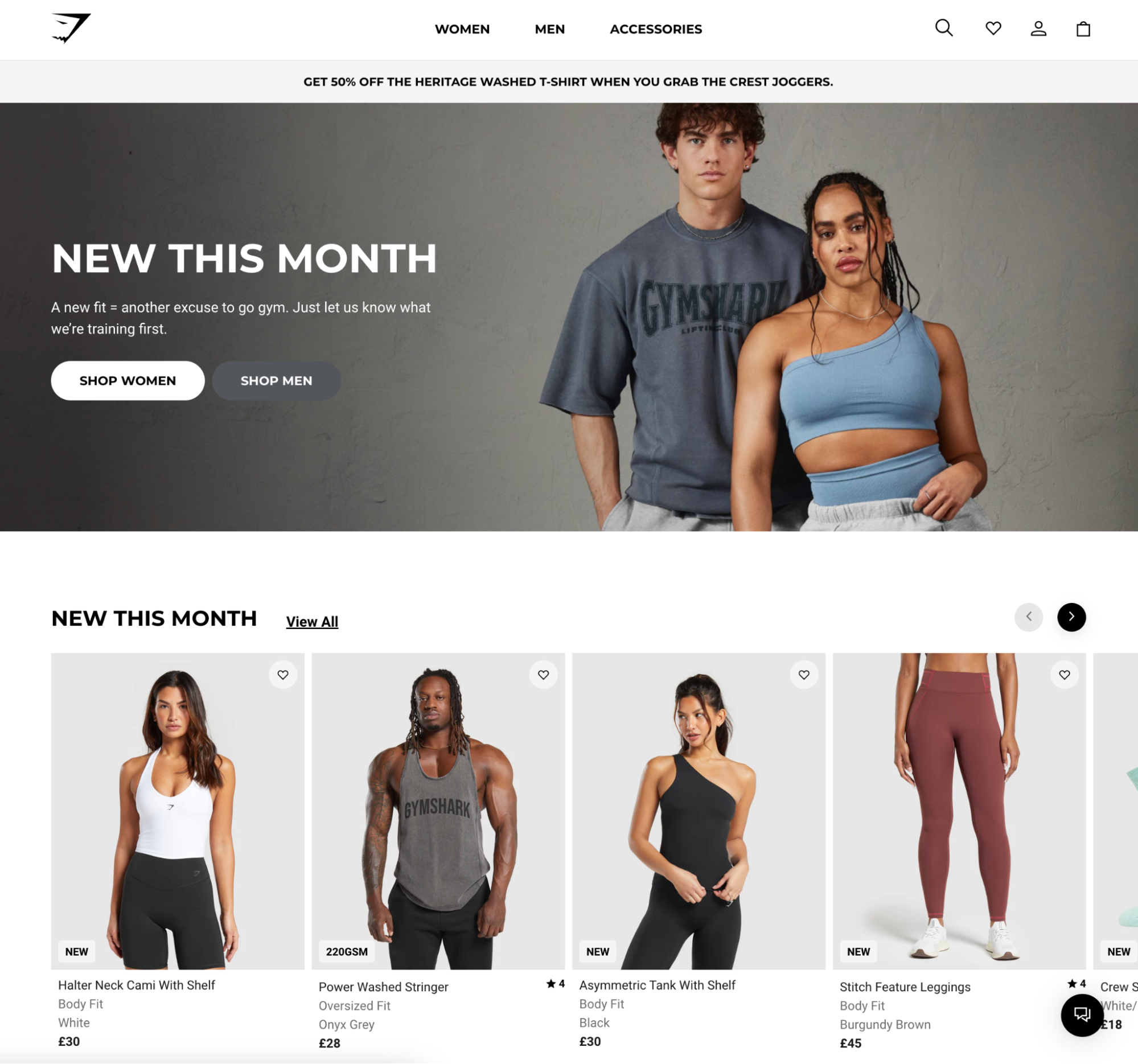
The Gymshark website.
Why the Gymshark ecommerce website works well
Today, Gymshark has built a community known as Gymshark athletes.
Some of them appear in photos on Gymshark’s product pages. Others, like Whitney Simmons—a fitness content creator with millions of followers and subscribers across her social media channels and on YouTube—have a Gymshark product line that carries their name.
Many of them proudly promote their “Gymshark athlete” status in places like social media bios and in videos they post, along with their discount code.
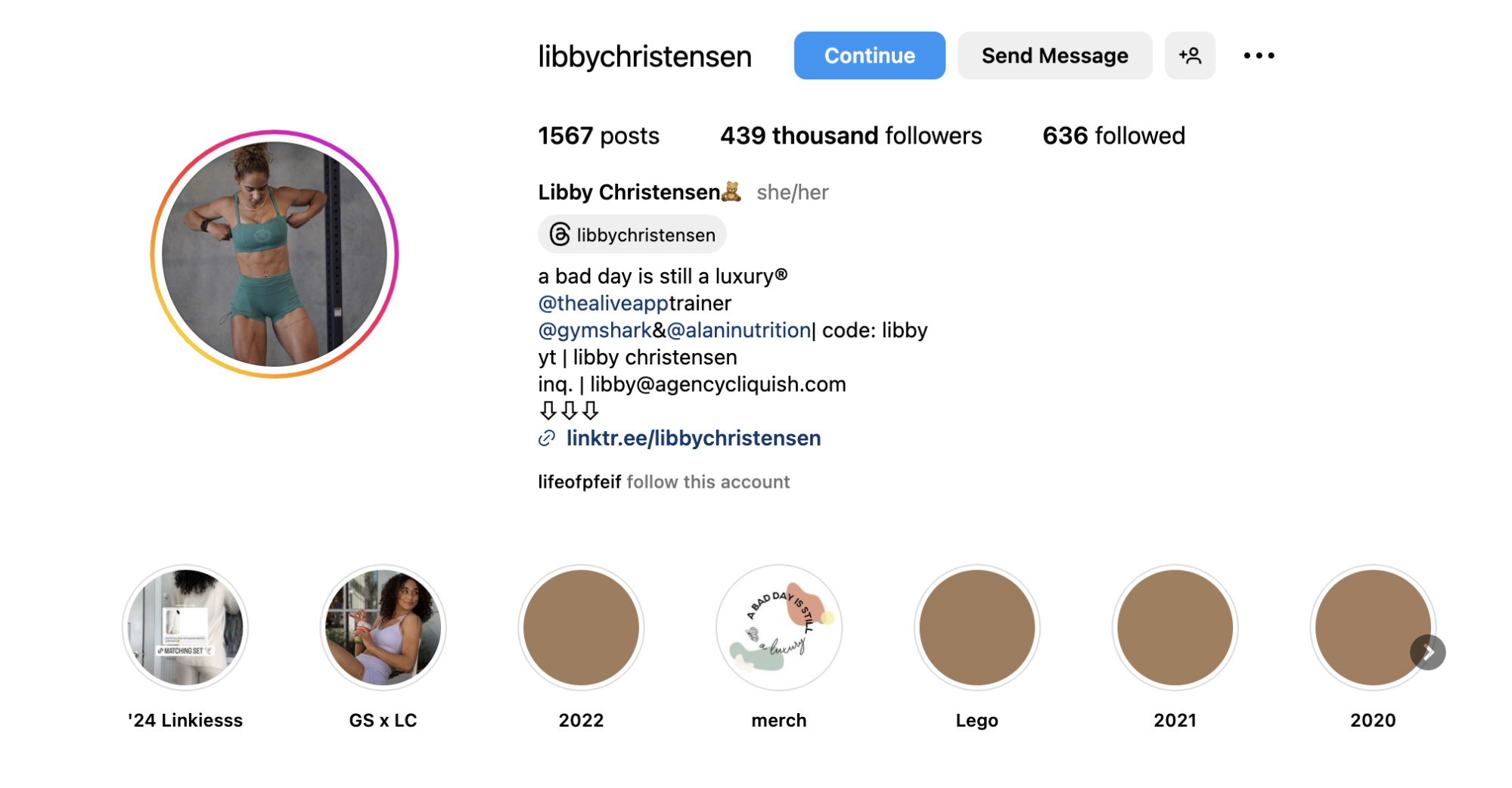
Instagram profile of one of Gymshark’s athletes, Libby Christensen.
Gymshark’s social media content heavily leans into user-generated content by its athletes and by the community at large, helping the brand reach at least half a million people with each post and drive both brand awareness and website traffic.
And Gymshark brings this online success offline through live events like LiftLA, with workout sessions and meet-and-greets that allows fans of the brand and its athletes to connect in-person.
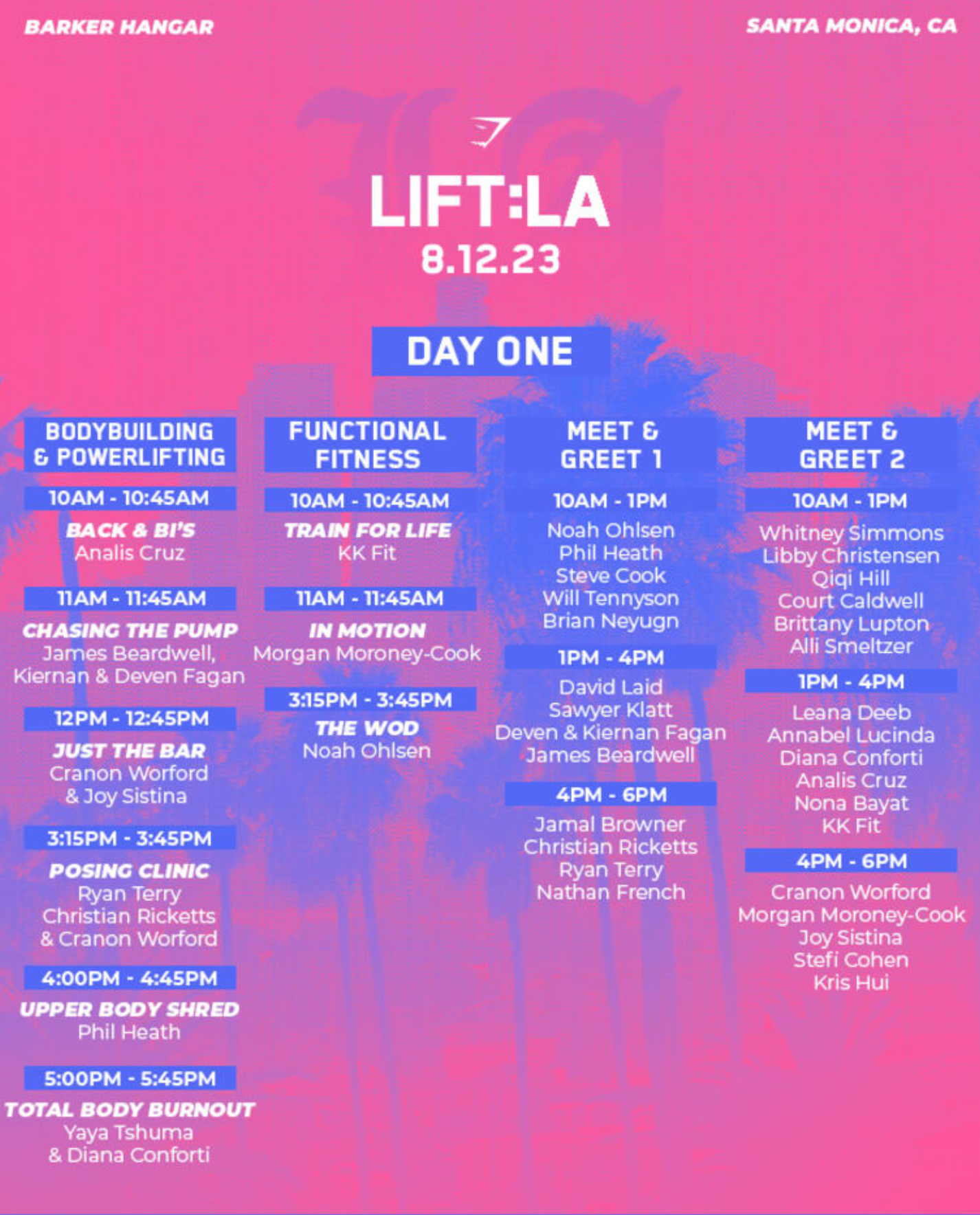
Schedule for Gymshark’s live event, LiftLA.
Bonus read: Check out how Gymshark scaled internationally with Shopify Plus.
9. Women’s Best
Women’s Best is the name behind sportswear and nutrition products for active women. From leggings, joggers, sports bras, and workout accessories to protein powders and food supplements, Women’s Best is easily a one-stop shop for its target audience.
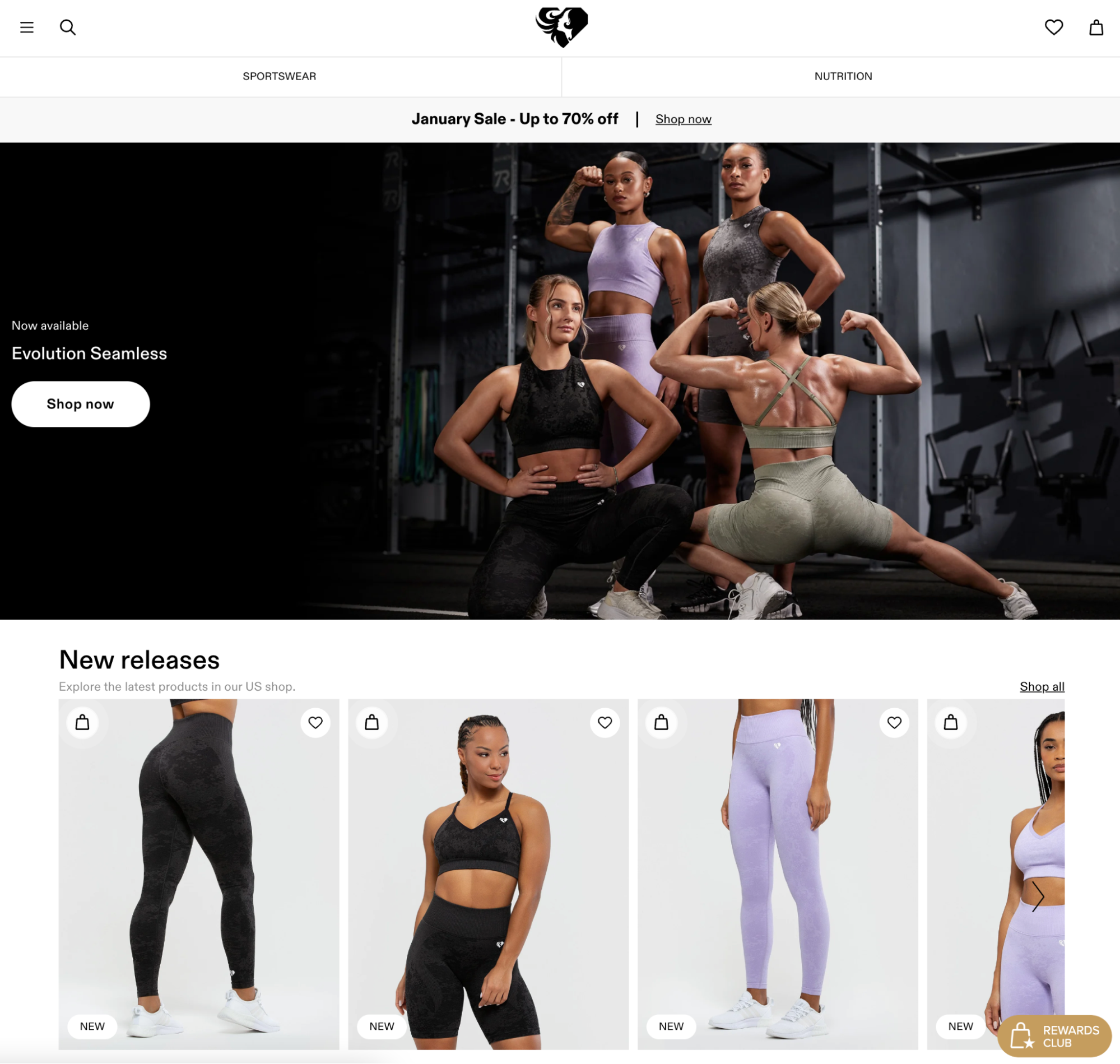
The Women’s Best homepage.
Why the Women’s Best ecommerce website works well
Aside from its social media—especially Instagram, with a following of more than three million —Women’s Best has a huge focus on email marketing as a promotional channel and a way to connect with loyal customers and the female fitness community in general.
In these emails, Women’s Best announces product updates big and small, from two new colors in an established product line to a big collection release.
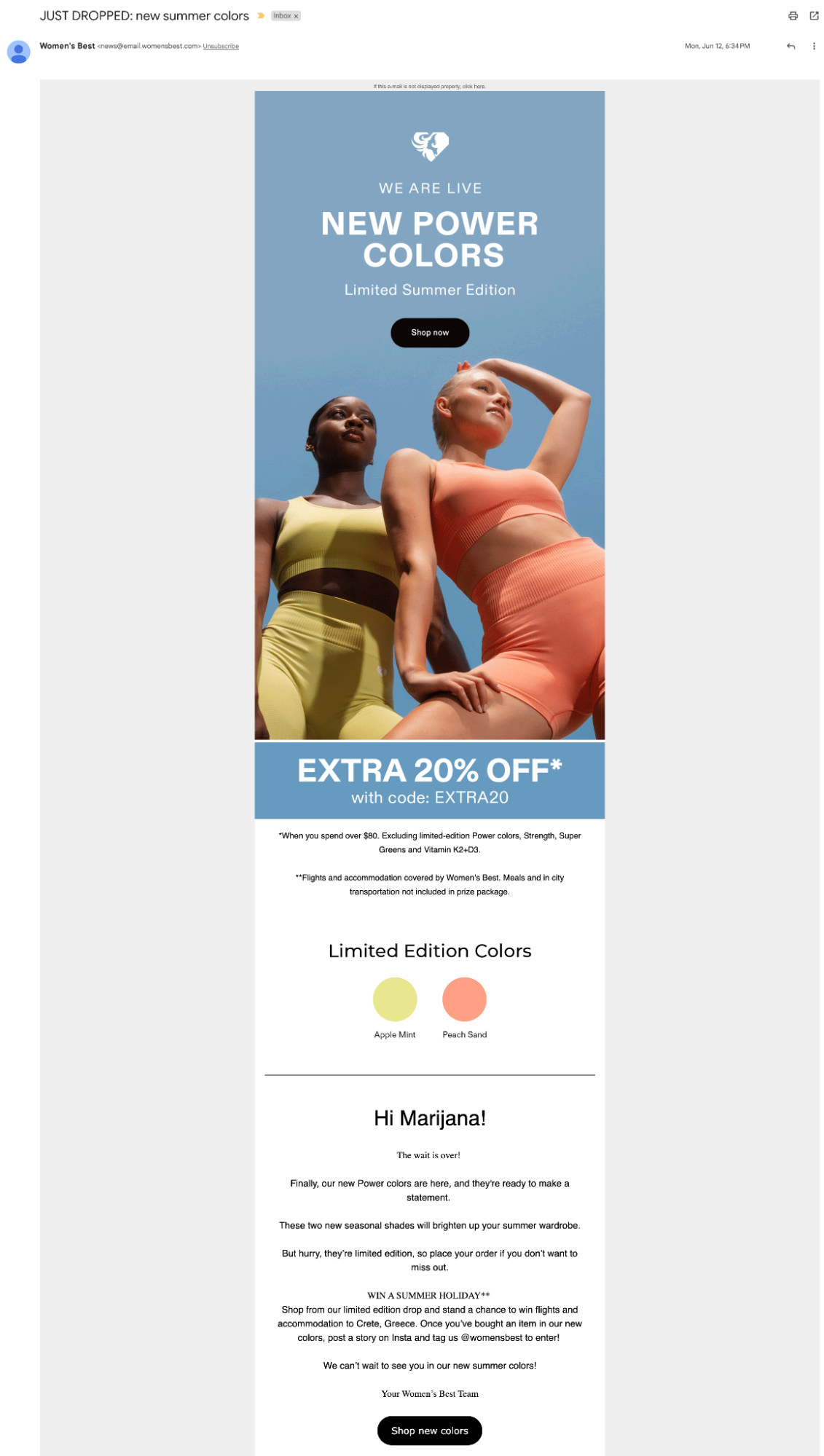
A product update email from Women’s Best.
Other emails from Women’s Best include back-in-stock updates, reminders of loyalty points to spend, and announcements of upcoming discounts and promotions—all of them driving people back to relevant parts of the website and making each customer’s journey connected between channels.
With two to three emails per week, Women’s Best is engaging its community and helping customers find and buy the right products at the best prices.
10. Kotn
Kotn is a Canadian clothing brand whose products are made in the Nile Delta. Quality basics made of 100% Egyptian cotton makes the core of its product mix.
When Kotn was founded, the goal was to create the perfect t-shirt without compromising on quality, price, or integrity of the people who made it. The company is now a certified B Corporation—meaning it meets the highest standards of social and environmental performance—and has the fourth-highest B Impact Score of apparel brands in North America.
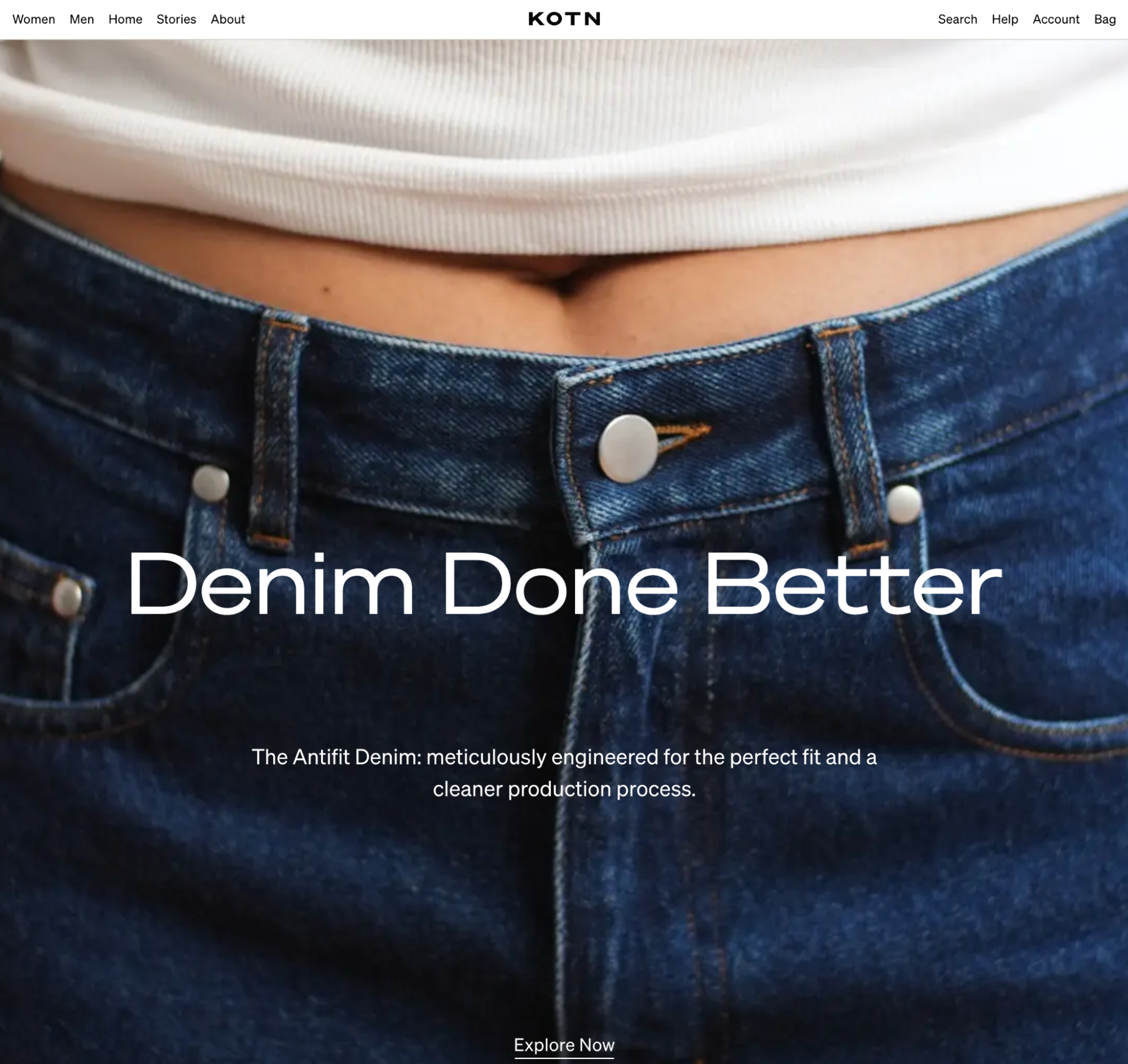
The Kotn homepage.
Why the Kotn ecommerce website works well
Kotn’s website has achieved something many other fashion ecommerce sites never manage to: fast loading speed.
A Deloitte report found retail conversion rates increase by 8.4% when there’s a 0.1 second increase in site speed. Yet another study found that slow websites cost the top fashion brands in the UK a combined £1 billion (around $1.27 billion) per year.
In other words: website performance and loading speed matter, and top fashion ecommerce sites are no exception to that.
Kotn has nailed this. Browsing and shopping its website is delightful, and search engines reward fast websites. Investing in website load speed and performance pays off big time.
To see your own site speed and performance, check out the free PageSpeed Insights tool, which provides scores and recommendations for improvements. Learn more in our website speed optimization guide.
Bonus read: Check out how Kotn uses Shopify Storefront API to power a headless build.
11. Alo Yoga
Alo Yoga is a well-known brand of clothes and accessories for yoga and working out. Its goals include spreading mindful movement, inspiring wellness, and creating community.
“More toes-on-the-mat experiences,” Alo Yoga’s About page calls for. Since 2007, the brand’s aim has been to make the best yoga clothing for yogis and yogis to be.
It’s no surprise then that Alo Yoga built a strong offline presence, too. The company runs yoga classes in its own yoga studios, along with its retail presence with over 45 stores in 15 states.
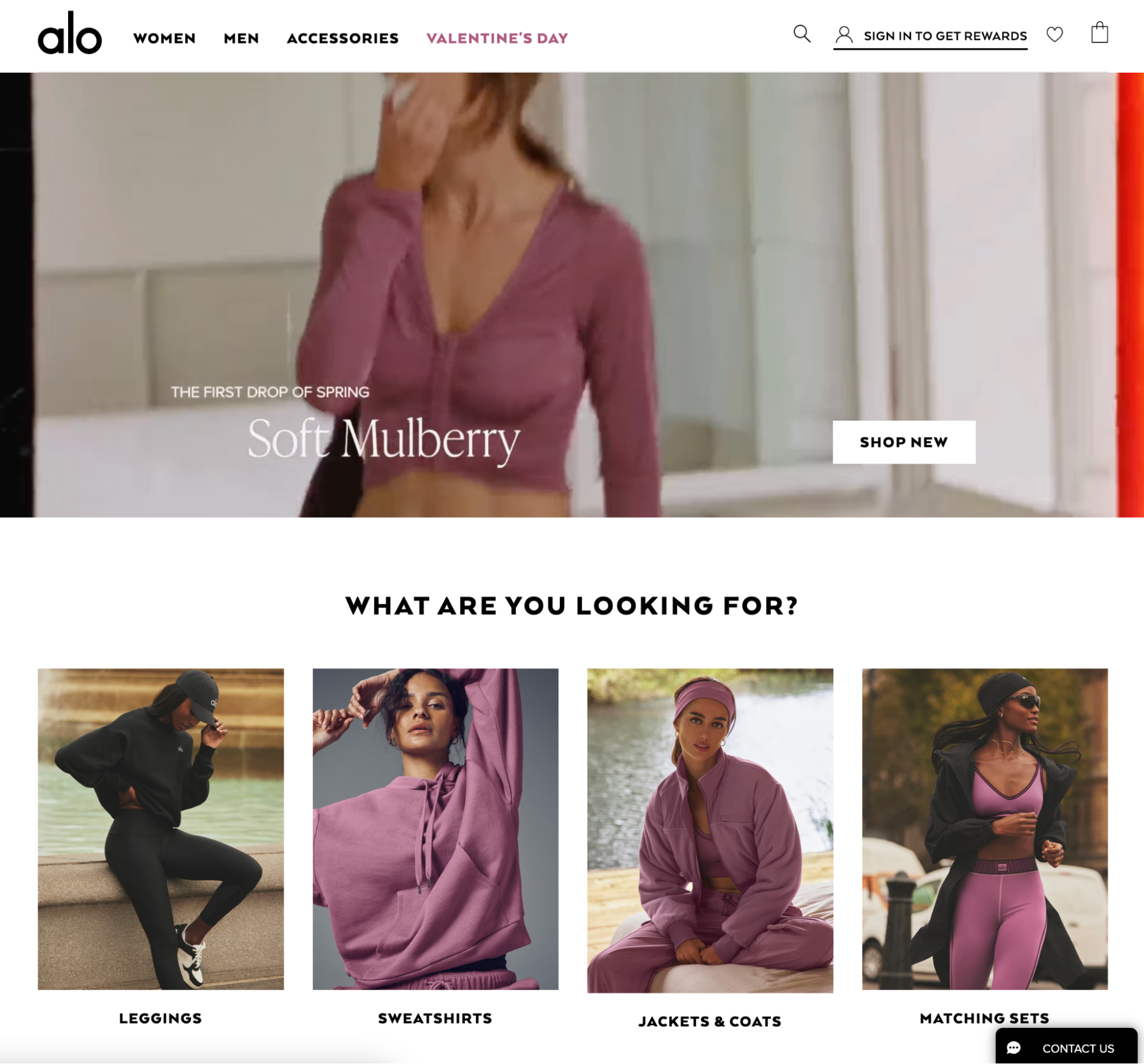
The Alo Yoga homepage.
Why the Alo Yoga ecommerce website works well
Alo Yoga wants to reward customers for their loyalty, whether their journey with the brand started a decade ago or just recently.
For every dollar they spend, customers earn one point in the Alo Access rewards program. Based on the points they earn, they fall into one of three tiers with different benefits, from a birthday gift in the lowest tier to invite-only classes and events in the highest one.
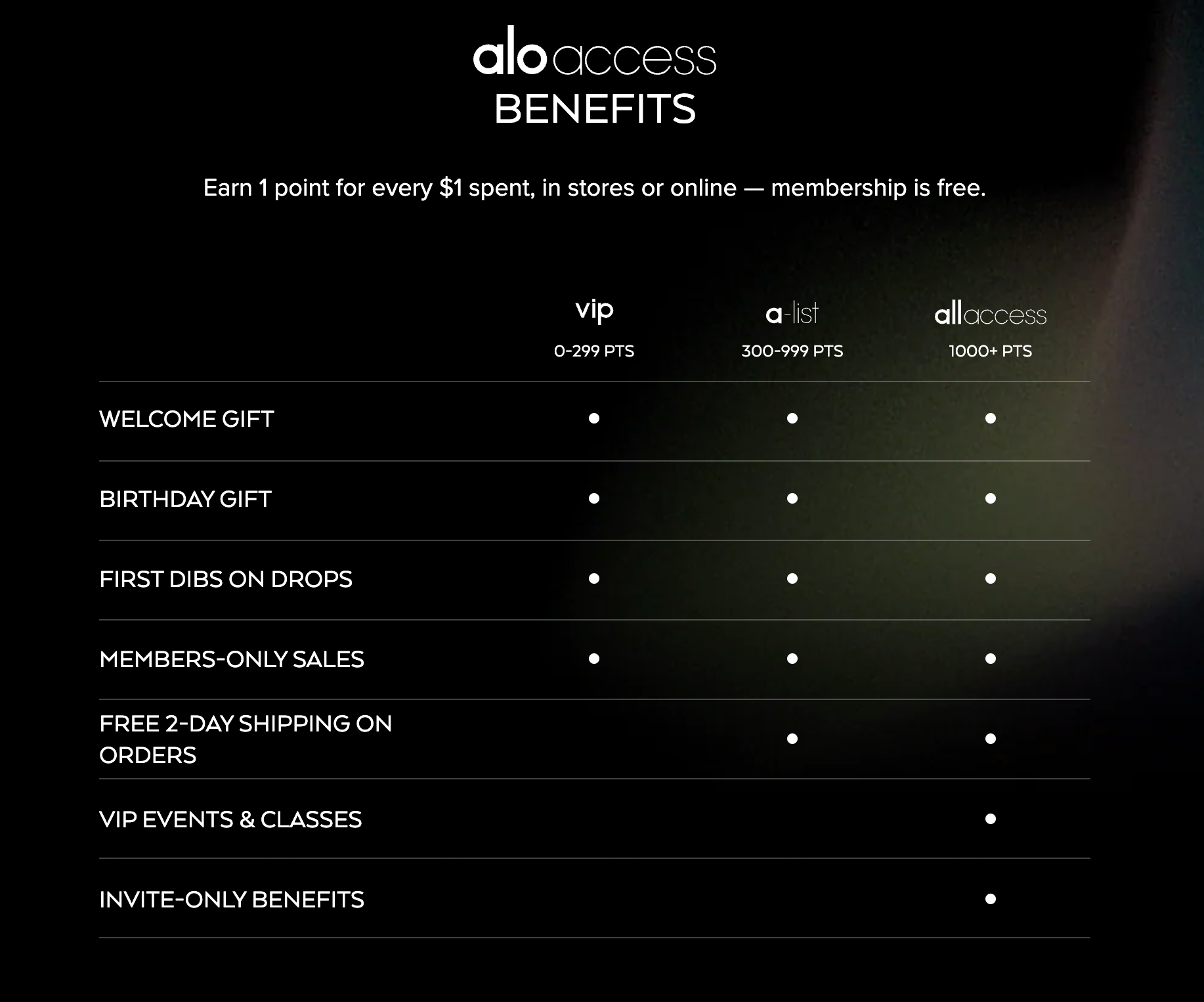
The Alo Access rewards program.
Customers that reach the medium tier—a minimum of 300 points, or a $300 total spend—get free expedited shipping on all orders in the United States.
For many customers, this tier is reachable with only one or two orders, so this is an excellent way Alo Yoga incentivizes repeat purchases. And paired with a straightforward return policy, it keeps customers trying new products risk free.
12. Aday
Aday makes versatile, essential clothing pieces in an effort to help people build themselves a capsule wardrobe. The purpose of a capsule wardrobe is the ability to do more—i.e., put together as many fantastic outfits as possible—with less.
Aday’s products are purposefully machine washable, wrinkle free, comfortable, breathable, and functional.
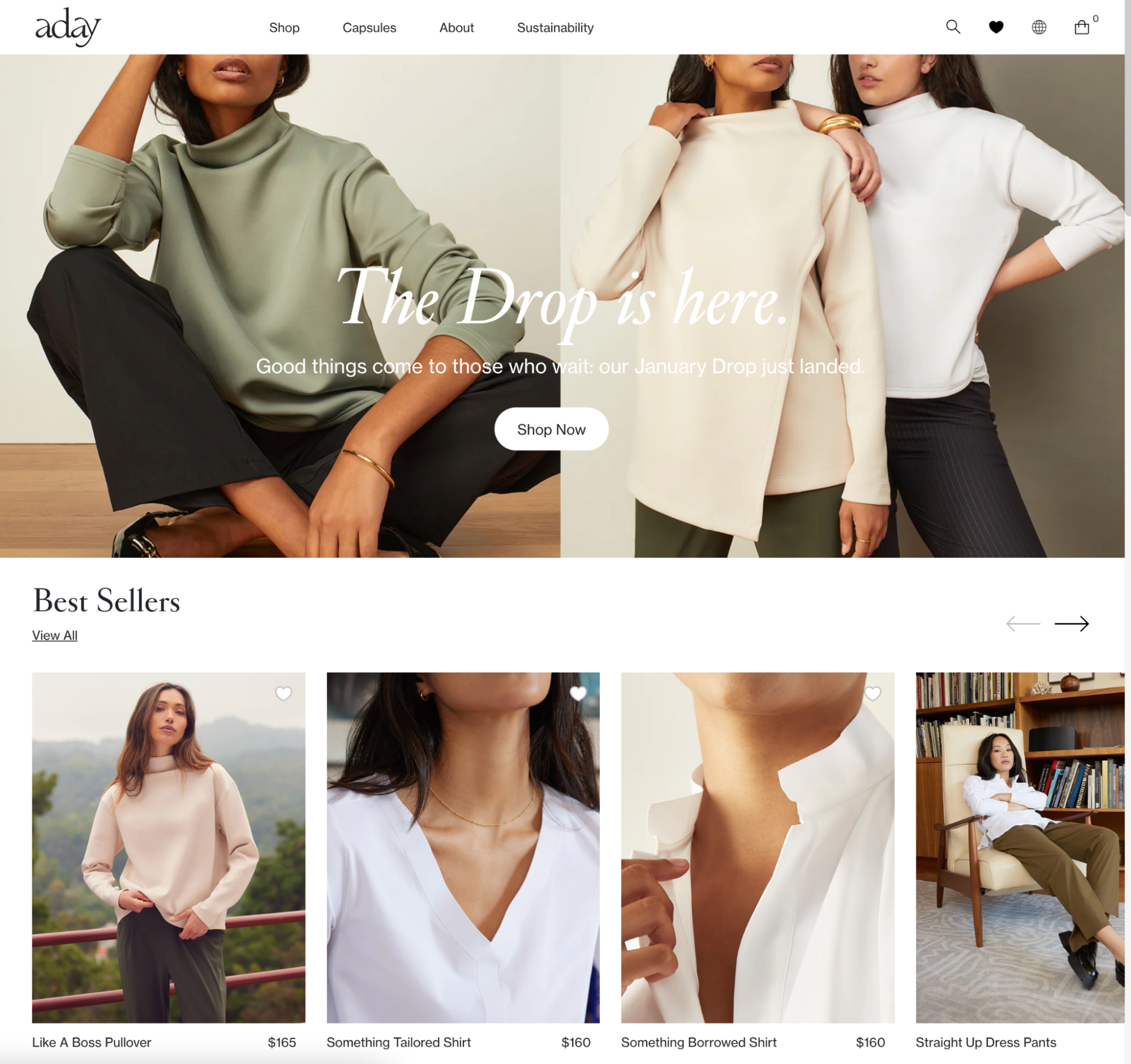
The Aday homepage.
Why the Aday ecommerce website works well
Aday’s focus on the concept of capsule wardrobe is so embedded into the brand that the main navigation bar invites visitors to explore capsules the Aday team pre-built. This concept makes it easy to seamlessly purchase products featured in a capsule.
Some examples include a capsule made of only four pieces (Summer House Capsule), while another one features 13 items for everyday wear (Stretch Classics Capsule).
To complement this deep focus on minimalist wardrobe, Aday actively runs a blog—Aday Journal—with in-depth guides on building different types of capsule wardrobes. Topics include everything from summer, spring, French, or travel capsule wardrobes to checklists, step-by-step tutorials, and garment-specific guides.
What a way to provide value and build thought leadership in an area so close to the brand’s core.
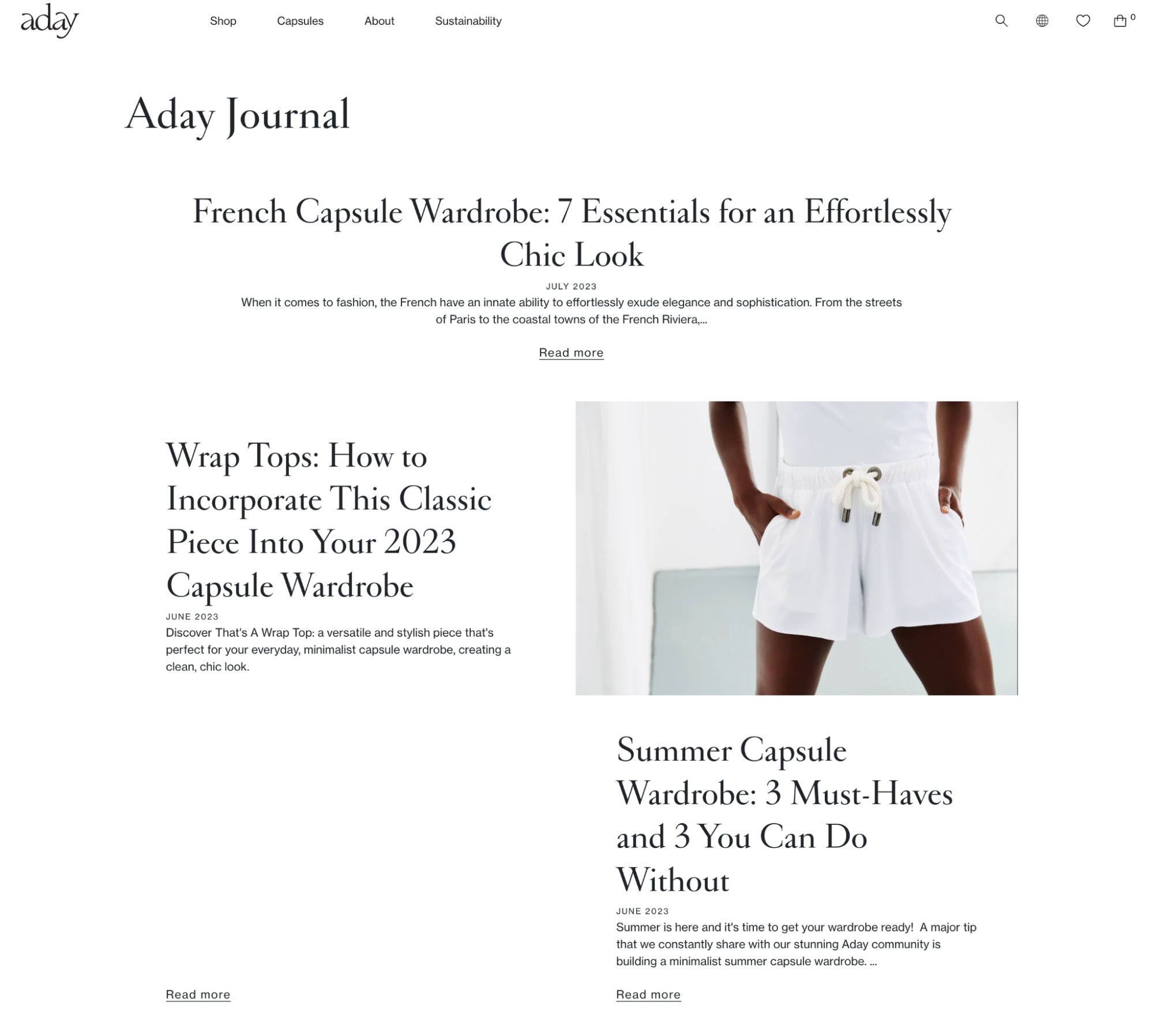
Aday’s blog called Aday Journal.
Level up your fashion ecommerce site
Now you know how some of the best ecommerce fashion brands made it to the level they’re at.
From luxury brands and those that have been around for decades to emerging fashion websites and brands, these 15 brands have found a way to claim their piece of the online sales pie.
There’s one thing they all have in common: they’ve chosen to build their online store on Shopify’s ecommerce platform, leveraging powerful features, capabilities, integrations, and a robust, reliable technology that supports even the busiest of sales seasons.
Want to experience the same? Check out what Shopify Plus can do for you.
Read more
- The Ecommerce Guide to Improving Your First Contentful Paint (FCP) Score
- The State of the Ecommerce Fashion Industry: Statistics, Trends, and Strategies to Use in 2025
- What is Lifestyle Photography?
- Unified Commerce: The Future of Seamless Shopping
- Omnichannel Vs. Unified Commerce: Which is Better?
- What is Buy Online, Pickup in Store?
- What is Product Bundling?
- How To Write a Return Policy (+ Free Template) (2025)
- Sustainable Fashion: How To Make Your Fashion Brand More Green
- How to Build a B2B Fashion Ecommerce Company
Fashion ecommerce websites FAQ
Which ecommerce platform is best for clothing?
Clothing brands work best on a platform that allows them to:
Sell across multiple, integrated channels
Convert as many shoppers as possible with easy checkout and flexible payment options
Scale globally with international ecommerce features
Run their entire business from one place, using powerful integrations and partnerships
Shopify Plus is made for fashion brands who want to do exactly this, growing their sales and revenue without their tech setup becoming a headache.
What is the biggest fashion ecommerce brand in the world?
Fashion ecommerce brand with the biggest market capitalization is LVMH, the luxury fashion group that runs brands like Fendi, Givenchy, TAG Heuer, and Stella McCartney.
Next on the list of biggest fashion brands are Nike, Dior, and Inditex (the fashion group behind brands Zara, Stradivarius, Bershka, and Massimo Dutti).
Is Shopify the best for clothing brands?
Shopify Plus is made for fast-growing, innovative fashion ecommerce companies who want to reach more customers, convert more checkouts, and scale fast.
Huge clothing brands like SKIMS, Gymshark, Allbirds, Alo Yoga, and Petal & Pup certainly agree. Check out their Shopify Plus success stories.